Barber Silver Half Dollar Value Guide: 10 Valuable Barber Half Dollars
Here are the top 10 most valuable Barber half dollars and their approximate value ranges:
- 1892-O Micro O: Valued at $2,500–$60,000
- 1904-S: Valued at $200–$21,500
- 1901-S: Valued at $200–$11,000
- 1896-O: Valued at $110–$7,100
- 1907-S: Valued at $70–$6,400
- 1901-O: Valued at $70–$5,400
- 1893-S: Valued at $300–$5,100
- 1897-O: Valued at $350–$4,400
- 1897-S: Valued at $300–$4,000
- 1896-S: Valued at $140–$3,900
The most valuable Barber half dollars are key dates, low-mintage branch-mint issues, and well-preserved high-grade coins, with scarcity, condition, and historical significance driving their premium over silver content.
Barber half dollars, minted from 1892 to 1915, are prized by collectors for their historical importance, classic design, and intrinsic silver value. While most circulated heavily, certain dates and branch-mint issues are rare and command substantial premiums in higher grades.
Understanding the factors that influence value, from condition and mintmarks to rarity and silver content, can help you make informed decisions.
Whether you’re tracking key dates or evaluating your own collection, Barber half dollars remain a fascinating and potentially lucrative segment of American coinage.
If you’re lucky enough to own a Barber half dollar and would like to know how much it is worth or you’re ready to sell a Barber half dollar from your collection, Coinfully makes it easy with free online coin appraisals, market-leading offers, and fast, secure payments.
1892 O “Micro O” Barber Half Dollar: $5,000–$60,000
We’ll begin this list with a coin anomaly, the 1892-O Micro O Barber half dollar, which is often regarded as the crowning achievement for anyone wishing for a complete set of Barber half dollars. Due to its rarity, this coin is expensive in all grades.
This coin from the inaugural year of the series mistakenly received an unusually small “O” mintmark. Surviving coins with the micro “O” minting error are very rare to come across, and even more scarce to find with a high grade.
Because of this minting error, this coin has become a historical artifact with a degree of rarity that justifies the price.
1904 S Barber Half Dollar: $200–$21,500
Next up is the 1904-S from San Francisco, with a value range of roughly $11–22k. This coin is another rarity in this series, as the San Francisco Mint struck only around 550,000. Due to low popularity, it is thought that many remained undistributed and may have been melted.
Despite the low minting rate, the circulation rate of distributed coins was quite high. If you happen to own one of these coins with minimal wear, you can expect a selling price on the higher end of the spectrum.
1901 S Barber Half Dollar: $200–$11,000
The 1901-S Barber half dollar radiates manifest destiny, as it was created during a time when the western United States was being developed for Americans looking to farm or resettle.
The 1901-S has a similar mintage to that of the 1904-S at around 850,000. Searching for these coins has proven to be quite the challenge, and the value of these coins can range substantially.
1896 O Barber Half Dollar: $110–$7,100
Many coin collectors find the 1896-O Barber half dollar to be particularly challenging to collect, particularly in higher grades.
This is due to the low mintage number of 920,000, which was only slightly higher than that for the 1901-S.
The New Orleans Mint is notorious for subpar production standards, which has resulted in many 1896-O coins showing significant wear and damage. The true historical significance of this coin lies in its association with the South’s post-Civil War economy.
1907 S Barber Half Dollar: $70–$6,400
Circling back to coins from San Francisco, the 1907-S is a classic Californian coin with a mintage of 1.25 million.
This coin was minted during the height of the Progressive Era amidst the American journey out West. Collectors are interested in this coin for its symbolism of economic prosperity in America.
1901 O Barber Half Dollar: $70–$5,400
The 1901-O Barber half dollar was another victim of the New Orleans Mint’s poor production quality, with many 1901-O coins being weakly struck, especially in the center.
Although it seems like this coin would be less scarce due to its high mintage, many of the coins were damaged due to heavy circulation.
If you’re interested in Southern minting history and Reconstruction-era economics, this coin could make an intriguing addition to your collection.
1893 S Barber Half Dollar: $300–$5,100
Because this coin was minted during the Panic of 1893, the 1893-S is not common to come across, especially in higher grades.
This coin is of particular interest to collectors who intend to complete a set of Barber half dollars with coins from each of the four mints featured in the collection.
As is expected, higher-grade 1893-S coins will be offered a greater amount of money.
1897 O Barber Half Dollar: $350–$4,400
With only 632,000 minted, this coin is the third-lowest mintage year in the Barber half dollar series, making it significantly rarer than other years and highly sought by collectors, especially in nice condition.
Like many New Orleans issues, it often shows weakness in details such as the forehead, shield, and feathers, making well-struck examples even more desirable.
1897 S Barber Half Dollar: $300–$4,000
The 1897-S is not the rarest of the Barber series, but well-preserved examples are still difficult to locate.
With only 933,900 minted at the San Francisco Mint, it’s relatively scarce compared to the main Philadelphia issue. Most surviving 1897-S halves are heavily worn, making coins preserved in excellent condition exceptionally rare and valuable.
1896 S Barber Half Dollar: $140–$3,900
While over a million were minted, the 1896-S is considered scarce in all conditions, even worn examples, making it a challenging find compared to many other dates in the series.
Minted during a period of great wealth and rapid American innovation (cars, movies, etc.), it reflects the national pride and classical aesthetics of the time.
Factors That Determine Barber Half Dollar Values
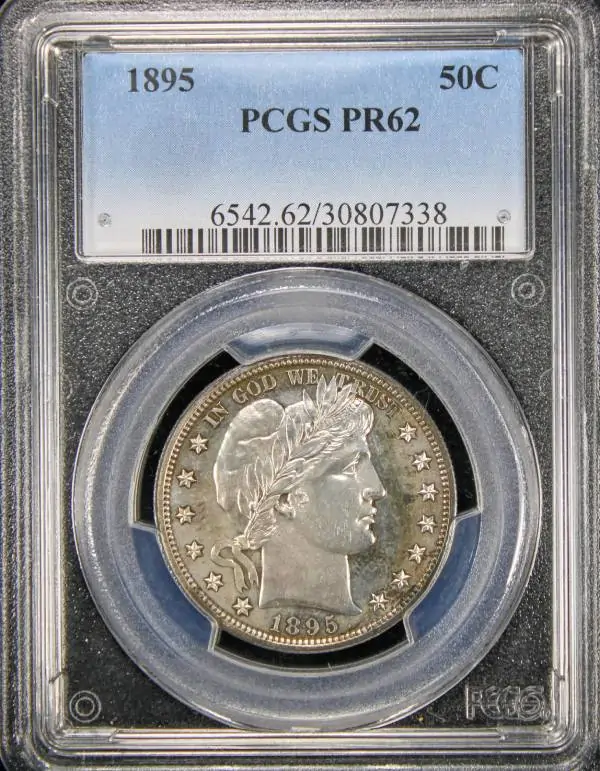
How much are Barber half dollars worth? The value of Barber half dollars is shaped by several interrelated factors that go well beyond simple age or silver content.
Understanding how these elements work together to establish silver half dollar value helps explain why some examples sell for modest premiums while others command five-figure prices.
Coin Condition and Grade
Condition is the single most important factor in Barber half dollar valuation. Because these coins circulated heavily, most surviving examples show substantial wear, with fine design details flattened or missing entirely.
Higher-grade coins retain sharper hair and feather detail, clearer lettering, and stronger overall definition, which dramatically increases desirability. Small differences in wear can result in large value jumps, particularly once a coin reaches collector-grade levels.
Date and Mintmark
The date and mintmark identify when and where a Barber half dollar was struck, and certain combinations are far scarcer than others. Branch-mint issues often saw lower production and heavier regional circulation, thus reducing survival rates today.
Even within the same year, values can vary significantly depending on mintmark, making accurate identification essential for proper valuation.
Rarity
True rarity is determined by how many coins survive today, not how many were originally minted. Some Barber half dollars had relatively high production numbers but few high-grade survivors due to heavy circulation, melting, or attrition.
Coins with low population reports in collector-grade condition consistently command higher prices because demand far exceeds available supply.
Barber Half Dollar Silver Content
How much silver is in a Barber half dollar? Each Barber half dollar contains a substantial amount of silver (0.3617 troy ounces), which gives the coin an intrinsic floor value tied to the precious metals market.
While silver content alone does not determine collectible worth, rising silver prices can influence demand and provide downside protection. For common, heavily worn examples, silver value often represents a significant portion of overall market price.
Historical Significance of the Barber Half Dollar
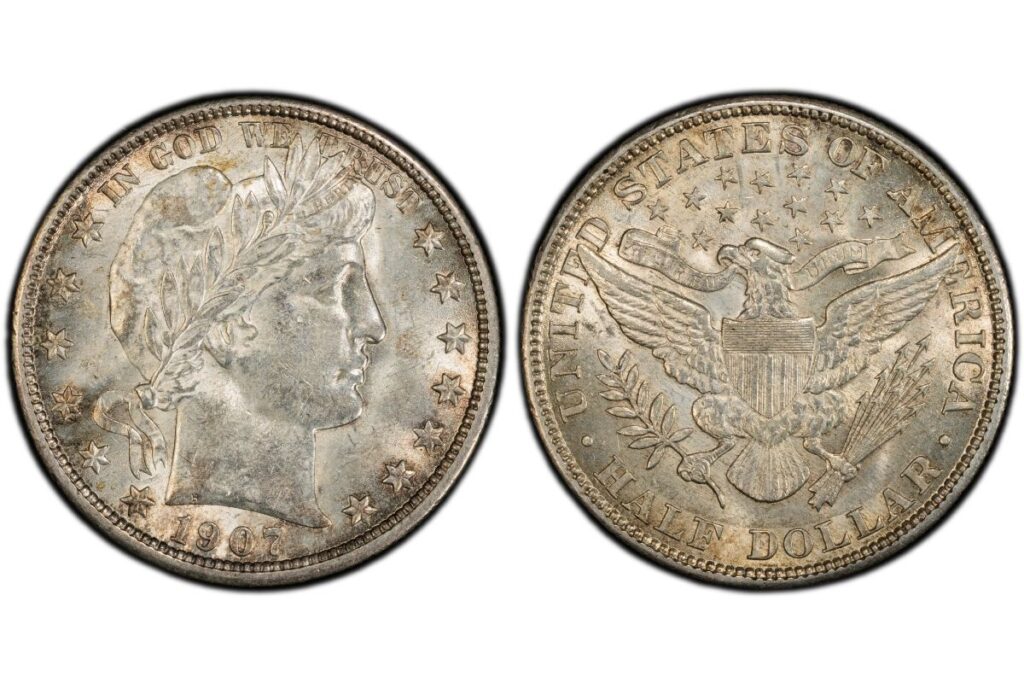
The Barber half dollar occupies an important place in American coinage as a bridge between the artistic experimentation of earlier designs and the classic silver issues that followed.
Struck from 1892 to 1915, this coin series reflected a period when U.S. silver coins were intended primarily for everyday commerce, not collecting.
Issued for less than 25 years following the Seated Liberty half dollar production run, it circulated widely during rapid industrial growth, making surviving examples valuable historical artifacts today.
Coin History
The Barber half dollar was introduced in 1892 following the expiration of the mandatory design period for earlier U.S. silver coinage.
Authorized under federal law, the redesign applied simultaneously to the dime, quarter, and half dollar, creating a unified coin series for everyday commerce.
The half dollar was designed by Charles E. Barber, the Mint’s chief engraver, and was struck continuously until 1915.
These coins were produced at multiple mints primarily for circulation and saw heavy use in commerce, banking, and large transactions. They were replaced in 1916 by the Walking Liberty half dollar design.
Because Barber half dollars circulated extensively during a period of rapid economic growth, most surviving examples show significant wear, making original, well-detailed specimens far scarcer today than production figures alone would suggest.
Design Elements
The Barber half dollar is known for its restrained, formal style rooted in classical symbolism.
The obverse features a dignified portrait of Liberty wearing a Phrygian cap, headband and laurel wreath, with a ribbon inscribed with the word “Liberty.” The design is encircled by stars, with the date on the bottom and the motto “IN GOD WE TRUST” along the top.
A heraldic eagle on the reverse is displayed in a bold design representing the United States of America, clutching an olive branch in the right foot and arrows in the left claw. Fine details such as the eagle’s shield and tail feathers contribute to the coin’s aesthetic appeal.
The reverse design also features 13 stars above the eagle and “UNITED STATES OF AMERICA,” “E PLURIBUS UNUM,” and “HALF DOLLAR” inscriptions.
Barber Half Dollar Mintage
Barber half dollars were minted for less than 25 years (1892 to 1915) and were struck at four U.S. mints: Philadelphia (no mintmark), Denver (D), New Orleans (O), and San Francisco (S). During its production run, over 135 million Barber half dollars were minted.
Mintages varied significantly by year and mint location, so many issues saw relatively modest production totals.
The year 1899 (Philadelphia) saw over 5.5 million produced, but other years were less productive. For example, The 1914 Philadelphia issue is notably scarce, with only 124,230 coins minted.
Some dates are considered common date coins in lightly worn condition, while others are scarce even in lower condition. Because these were working silver coins with heavy silver content, countless examples were lost to wear, hoarding, or melting for bullion.
As a result, well-preserved pieces command special attention from many collectors, especially those graded Fine and better, where original detail and overall state of preservation become critical value drivers.
Investing in Barber Half Dollars
Investing in Barber silver half dollars combines historical interest with tangible asset value. These coins are composed of 90% silver, giving them intrinsic metal value while also offering numismatic premiums that can far exceed bullion prices.
Investors focus on well-preserved pieces, key dates, and branch-mint rarities, as condition and scarcity drive long-term appreciation.
Unlike modern bullion coins, Barber half dollars have a documented historical context and limited supply, making them attractive for both collectors and investors seeking tangible, market-recognized assets.
Careful grading, authentication, and storage are essential to protect value over time.
If you’re interested in learning more about half dollars, read our guide on valuable Kennedy half dollars.
Key Date Barber Half Dollars and Varieties To Watch For
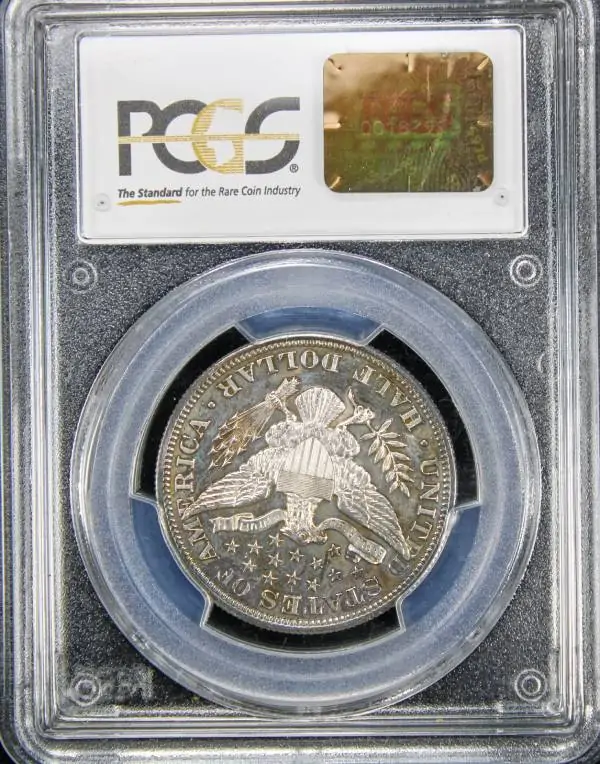
As with other early silver half dollars, certain Barber half dollars stand out as rare and expensive due to low survival rates and collector demand rather than age alone.
Key issues often come from branch mints, where lower production and heavier circulation resulted in fewer Barber half dollars surviving today.
Collectors pay special attention to dates such as 1892-S, 1893-S, 1897-O, 1904-S, 1913, and 1905 O, where subtle striking differences and specific mintmarks can dramatically affect value.
Because each coin was coin struck for circulation, authentic examples with original surfaces are increasingly difficult to locate, reinforcing long-term scarcity.
What To Do if You Have a Valuable Barber Silver Half Dollar or Other Rare Coin
If you own rare Barber half dollars or other valuable coins, avoid cleaning or polishing, as this can drastically reduce value. Gather any documentation, such as purchase receipts, previous appraisals, or provenance records, to establish authenticity.
Seek a professional coin appraisal from a trusted source to understand current market value.
For high-value coins, consider having them graded and encapsulated by PCGS or NGC. Grading Barber half dollars protects the coin, verifies authenticity, and can significantly increase buyer confidence.
Proper storage and careful handling are essential to preserve both condition and long-term investment potential. Learning how to sell silver coins and where to sell silver coins for top value ensures you don’t leave money on the table.
Get a Free Coin Appraisal With Coinfully
At Coinfully, we make it easy to understand what your valuable Barber half dollars and other rare coins may be worth with a free online coin appraisal that you can start right from home.
Just send us photos or a quick inventory, and our numismatic experts will provide a zero-pressure valuation and offer based on current market trends and real collector demand. No travel required.
For larger or historically significant collections, we also offer a concierge at-home appraisal service where a specialist travels to your residence, examines your collection firsthand, and delivers a market-leading offer. If you accept, you’ll have payment in hand the same day.
Whichever appraisal method you choose, you’ll get professional expertise without the stress and uncertainty of traditional appraisals, and you remain in control of your collection every step of the way. Coinfully makes it easy to sell silver coins from home.
Ready to get started? Contact us today to learn how much your coins are truly worth and receive a top-of-market offer for your collection.
The post Barber Silver Half Dollar Value Guide: 10 Valuable Barber Half Dollars appeared first on Coinfully - the Best Way to Sell Coins | Free Appraisals.
Original post here: Barber Silver Half Dollar Value Guide: 10 Valuable Barber Half Dollars


Comments
Post a Comment