Valuable Silver Half Dollars: 10 Rare Half Dollar Coins To Watch For
The 10 most valuable silver half dollars from 1794 to 1916 are:
- 1796 & 1797: $32,500–$1,820,000
- 1794: $2,000–$1,000,000
- 1838-O: $365,000–$850,000
- 1853-O No Arrows: $265,000–$400,000
- 1870-CC: $1,650–$385,000
- 1878-S: $27,000–$300,000
- 1892-O Micro O: $3,000–$140,000
- 1873 Open 3: $3,500–$73,500
- 1817/4: $6,089–$38,509
- 1815: $1,050–$21,500
*All prices are in USD according to Numismatic Guaranty Company’s Price Guide and PCGS.
Silver half dollars have been a cornerstone of American coinage since the late 18th century, blending historical significance with collector appeal.
Some issues stand out for their extreme rarity and high market value, making them extremely valuable.
If you think you might own a valuable silver half dollar and are interested in finding out how much it is truly worth, contact Coinfully today for an expert free online coin appraisal. Coinfully makes it easy to sell silver half dollars at top market value.
How Much Are Silver Half Dollars Worth?
How much is a silver half dollar worth? The value of silver half dollars can range anywhere from their intrinsic silver content to well into six figures, depending on age, rarity, and condition.
Common-date examples that circulate heavily often trade near melt value, while scarce early half dollars, key date issues, and high-grade specimens command substantial premiums.
Coins with low mintages, strong collector demand, and preservation in mint state represent the highest tier of value within United States numismatics.
Factors Affecting Silver Half Dollars’ Value
The value of a silver half dollar is shaped by several measurable characteristics that collectors and investors evaluate together.
- Rarity is driven largely by how many coins were produced and how many are known to exist today, especially for early issues.
- Condition is equally critical, with sharply struck, problem-free examples commanding far higher prices than worn or damaged coins.
- The mintmark can indicate a branch mint with lower output, which often increases desirability.
- Age, historical significance, and overall eye appeal also influence demand.
Even within the same denomination, small differences in strike quality or preservation can separate an ordinary coin from a rare and valuable silver half dollar worth thousands.
Bullion Coin Value vs. Numismatic Coin Value
Bullion value reflects a coin’s silver content and rises or falls with precious metals markets. Numismatic value is based on rarity, condition, demand, and historical importance and often far exceeds melt value.
A heavily worn half dollar may trade near bullion pricing, while a scarce date in mint state can sell for many times its silver weight. Understanding this distinction helps collectors avoid undervaluing coins with true collector premiums.

What Half Dollars Are Silver?
Not all half dollars contain real silver. U.S. half dollars minted before 1965 (including Franklin and Walking Liberty designs) are made of 90% silver. Kennedy half dollars from 1965–1970 contain 40% silver, with silver bonded to a copper core.
Beginning in 1971, most half dollars are copper-nickel clad and contain no silver, except for certain proof and special collector editions struck in silver.
Flowing Hair Half Dollar (1794–1795)
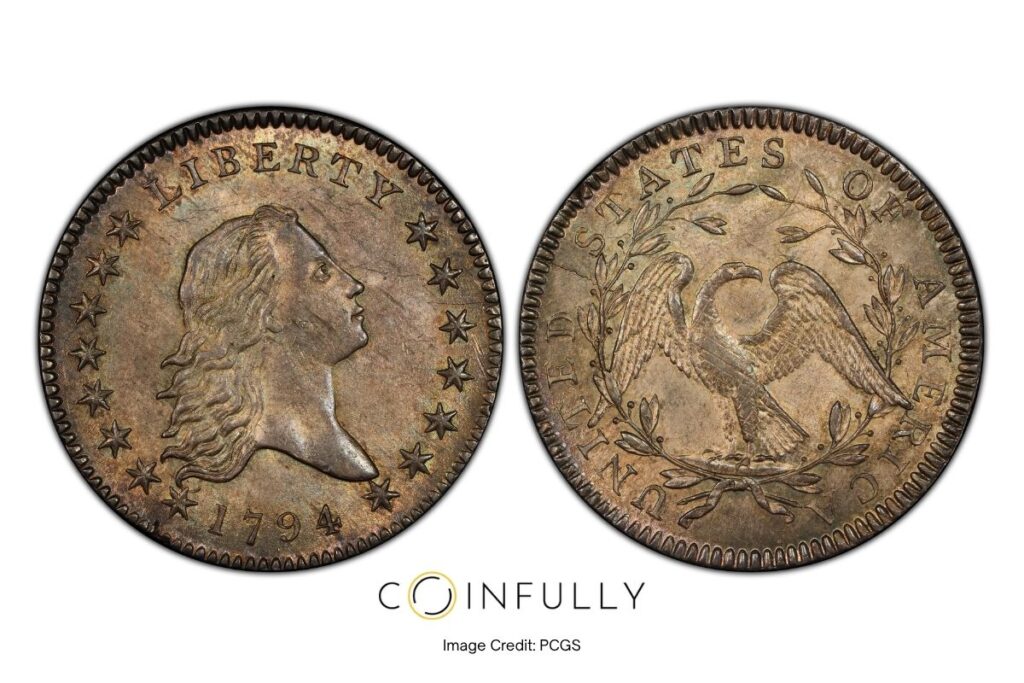
The Flowing Hair half dollar represents the first silver coin of this denomination issued by the United States Mint.
Designed by Robert Scot, who served as Chief Engraver of the United States Mint from 1793 until his death in 1823, the obverse features Lady Liberty with flowing hair, while the reverse showcases an eagle perched within a wreath.
Extremely limited production and heavy early circulation make surviving examples scarce, especially well-preserved specimens from the earliest years of American coinage.
Draped Bust Half Dollar (1796–1807)
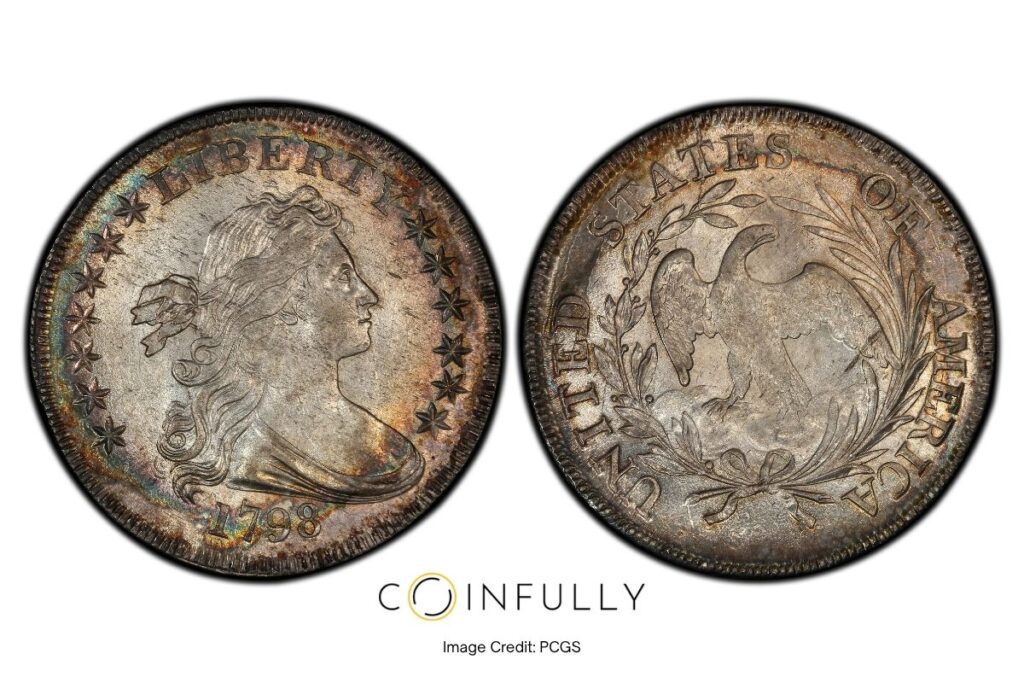
Draped Bust half dollars followed the earliest issues and reflect refined neoclassical styling. The coin features Lady Liberty on the obverse with draped fabric and 15 stars representing the states, while the reverse design evolved over time.
The designs of the Draped Bust series include both small eagle and heraldic eagle types, many with low mintages that remain highly sought-after among collectors.
Capped Bust Half Dollar (1807–1839)
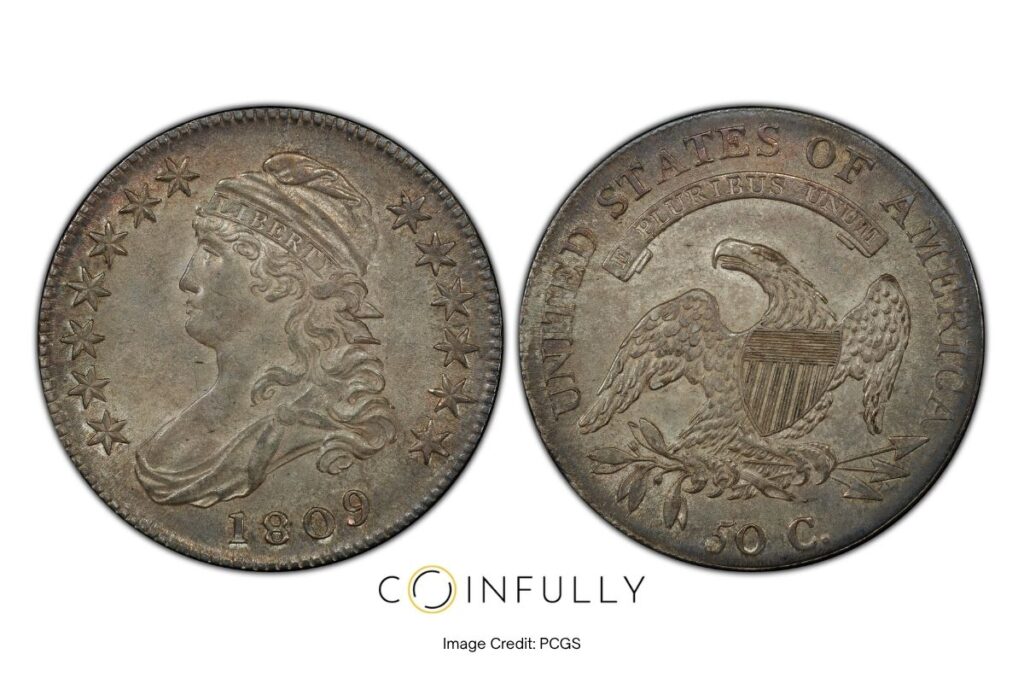
The Capped Bust half dollar introduced a bold new design with Liberty wearing a Phrygian cap on the obverse and a powerful eagle with a shield on the reverse.
Coins were produced in large numbers, yet many dates remain scarce due to heavy use in commerce. Early varieties and overdates are especially prized within the world of coin collecting.
Seated Liberty Half Dollar (1839–1891)
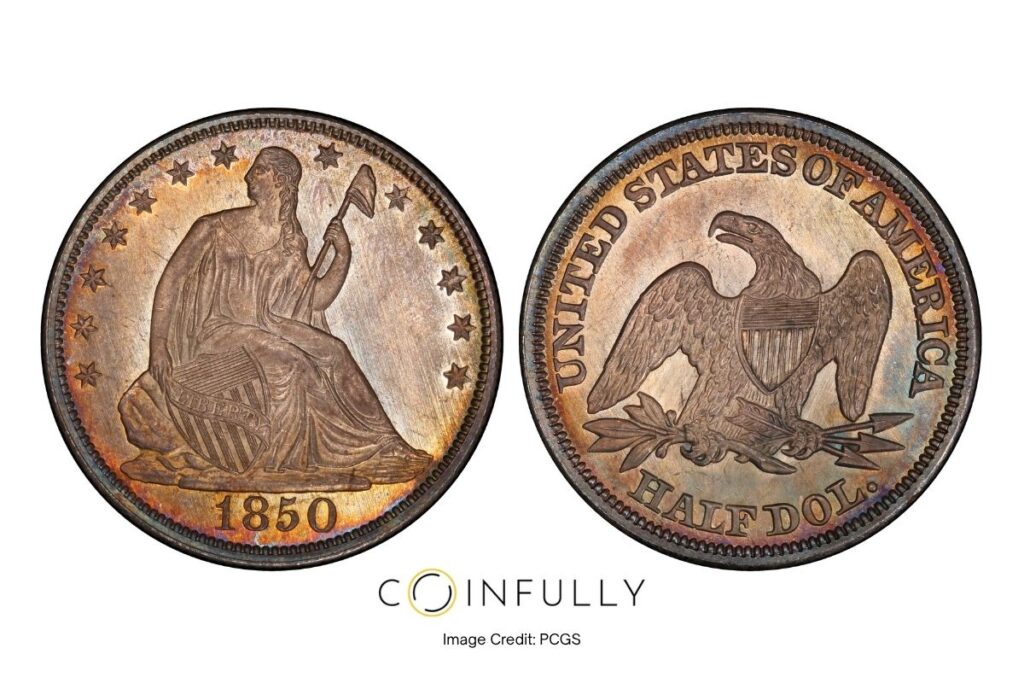
Seated Liberty half dollars depict Lady Liberty seated on a rock, holding a shield and a liberty pole. This long-running series, struck from 1839 to 1891, includes many scarce dates and mintmark combinations, particularly from the New Orleans Mint.
Design changes, limited mintages, and survival rates make certain issues rare and highly valuable today.
Barber Half Dollar (1892–1915)
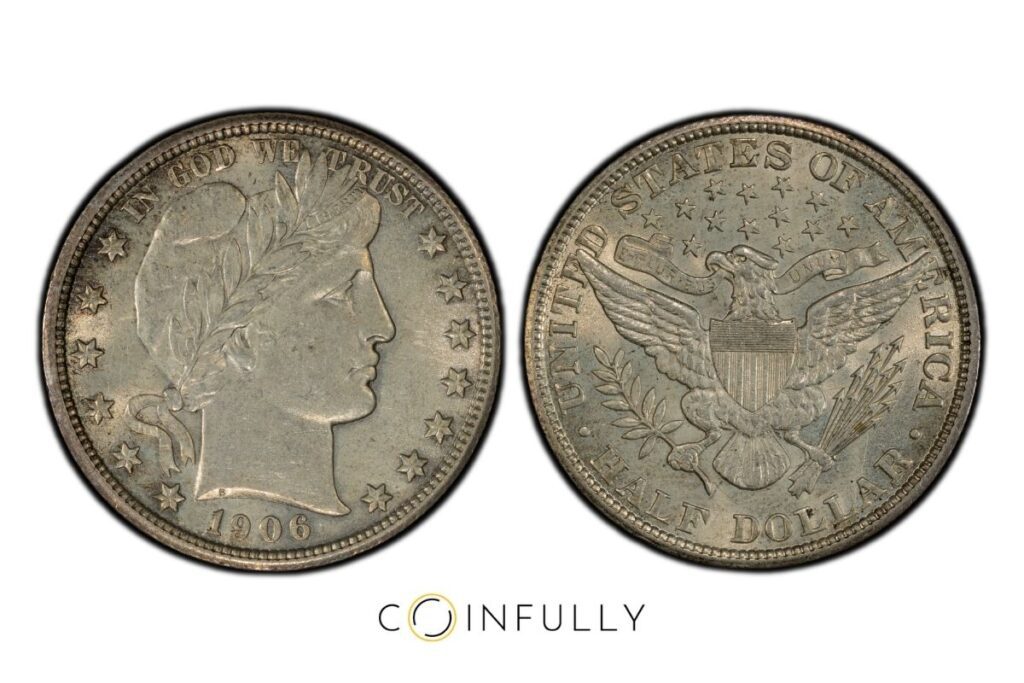
Designed by Charles E. Barber, the Barber half dollar features a classical Liberty head on the obverse and a heraldic eagle reverse. While many examples circulate heavily, select issues with low production or unusual characteristics stand out.
The 1892-O Micro O variety is a key date, valued for its subtle mintmark difference and limited known examples.
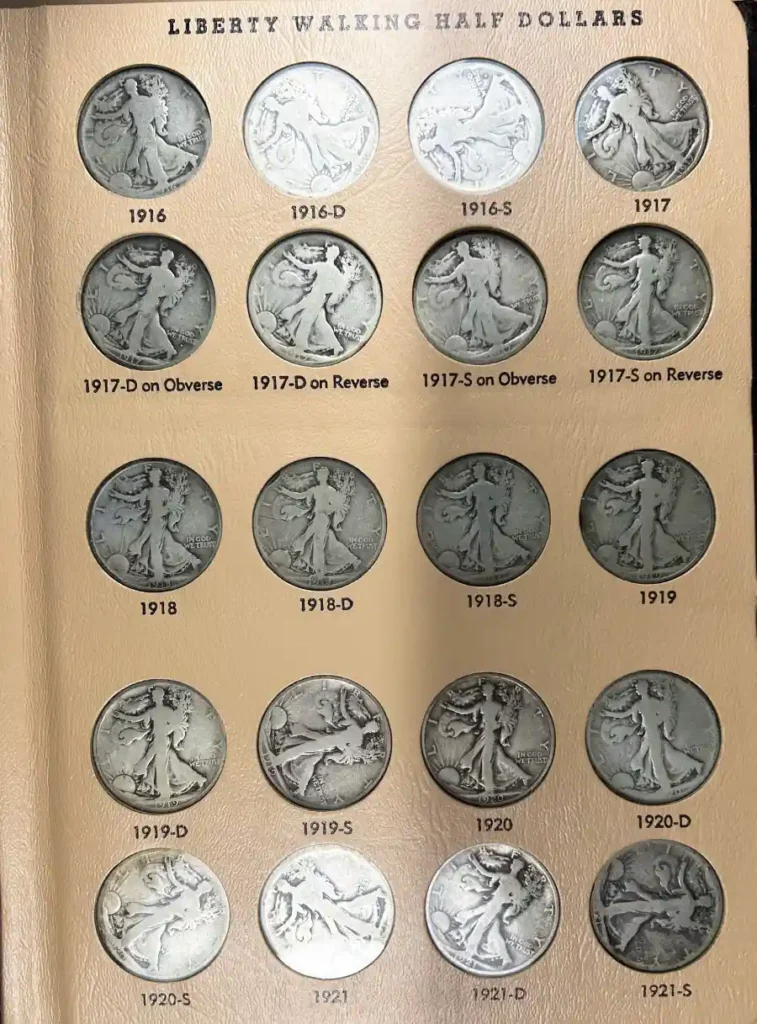
Walking Liberty Half Dollar (1916–1947)
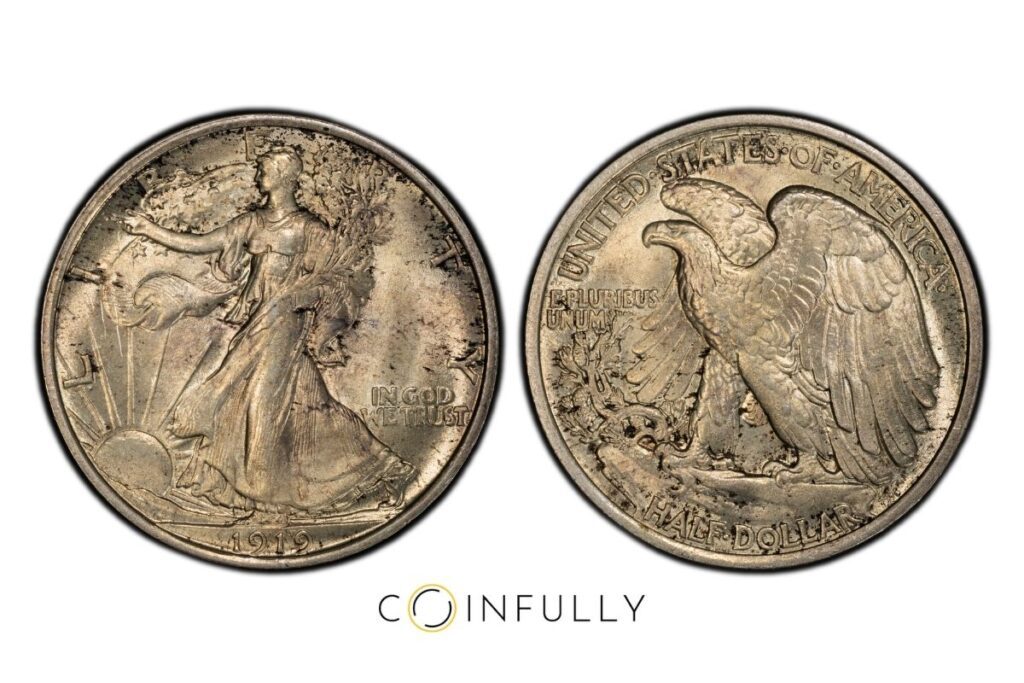
The Walking Liberty half dollar is widely regarded as one of the most beautiful U.S. silver coin designs, so much so that the Walking Liberty design was recreated on the modern American Silver Eagle coins.
Designed by Adolph A. Weinman, the obverse features Lady Liberty striding toward the sunrise, while the reverse showcases an eagle perched on a rock with an olive branch.
Walking Liberty silver half dollars were minted from 1916 to 1947. Certain dates, including the 1916-S Walking Liberty half dollar, are among the rarest of the series.
Franklin Half Dollar (1948–1963)
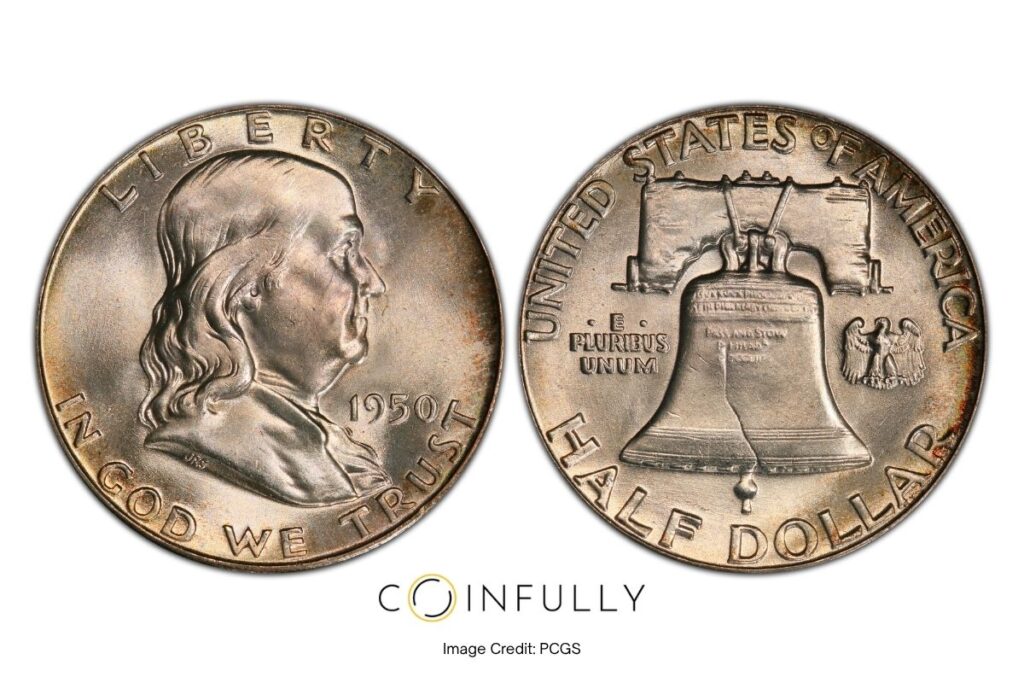
The Franklin half dollar marked the first time a non-president appeared on a circulating U.S. coin. Featuring Benjamin Franklin on the obverse and the Liberty Bell on the reverse, this series emphasizes historical symbolism over allegory.
Strike quality and surface preservation strongly affect Franklin half dollar value, with fully struck examples commanding premiums among collectors and investors.
Kennedy Half Dollar (1964–1970)
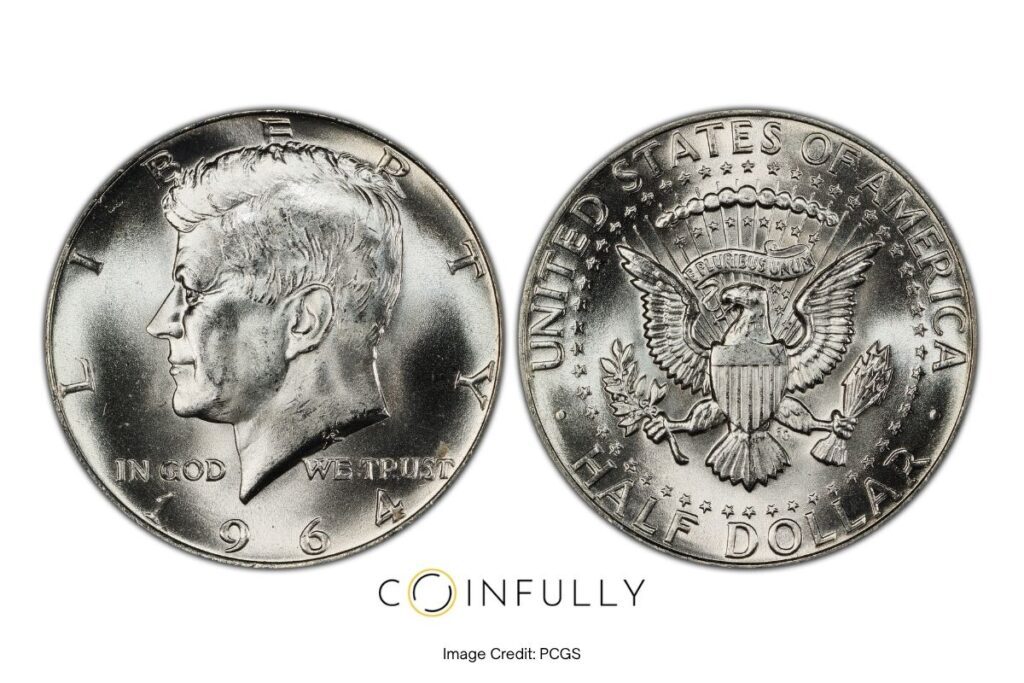
Introduced after the assassination of President John F. Kennedy, the Kennedy half dollar honors President Kennedy with a modern portrait.
The 1964 Kennedy issue contains 90 percent silver, while later silver versions contain reduced silver content (40%). Early silver issues are popular coins, with value influenced by condition, silver content, and collector demand.
Silver Half Dollars Post-1970
After 1970, silver half dollars largely disappeared from regular circulation, though limited silver issues continued through special strikes and collector-focused releases. These later coins remain important for understanding modern silver content and collector demand.
1971–Present: Copper-Nickel Clad Kennedy Halves
Beginning in 1971, Kennedy half dollars were struck in copper-nickel clad composition with no silver content.
These coins were minted in large quantities and intended for circulation, though quite a few coins saw limited use as the denomination fell out of favor. Most examples trade at face value unless found in exceptional mint state condition.
1976 Bicentennial: 40% Silver Half Dollars
The 1976 Bicentennial Kennedy half dollar features a special reverse honoring the nation’s 200th anniversary.
While most were copper-nickel clad, the United States Mint also issued collector versions containing 40% silver. These silver Bicentennial halves were sold in special sets and remain collectible for their historical theme rather than rarity.
1992–2018, 2019–Present: 90% Silver Proof Kennedy Halves
From 1992 onward, the Mint reintroduced 90% silver Proof Kennedy half dollars for collectors. These coins were not intended to circulate and were sold directly to the public in proof sets.
Their value is based on silver content, proof quality, and demand within modern numismatics rather than scarcity.
2014 50th Anniversary Silver Issues
The 2014 releases commemorated the 50th anniversary of the Kennedy half dollar with multiple special silver issues. These included proof, uncirculated, and enhanced finishes struck in 90% silver.
Although they are not rare, they are popular among collectors for their craftsmanship, presentation, and historical connection to President John F. Kennedy.
Most Valuable Silver Half Dollars From 1794 to 1916
The rarest and most valuable half dollars from 1794 to 1916 showcase some of the most significant coin types in U.S. history. These coins often had extremely low mintages, unique design features, or notable historical importance.
Collectors prize surviving examples, especially those in mint state, as they are among the rarest and most highly sought-after coins within the world of numismatics.
1796 and 1797 Draped Bust Half Dollars
The 1796 Draped Bust half dollar and 1797 Draped Bust half dollar are among the rarest and most collectible coins in early U.S. numismatics. Each coin had a mintage of only a few thousand, and surviving examples are exceptionally scarce.
There are two varieties of 1796 half dollars: 15 stars and the rarer 16 stars. All 1797 silver half dollars, however, show 15 stars on the obverse.
Collectors value these coins for their connection to the earliest federal minting practices and for the survival of very few specimens in high grades. Even an average-quality piece could be worth as much as $50,000.
Quick Breakdown: 1796 and 1797 Silver Half Dollars

Year: 1796 & 1797
Mint Location: Philadelphia
Mintage: 3,918 total
Price Based on Condition:
- Low: $32,500
- High: $1,820,000
Image Credit: Professional Coin Grading Service
1794 Flowing Half Dollar
The 1794 Flowing Hair half dollar holds iconic status as the nation’s first silver half dollar. It remains one of the rarest early half dollars and is a cornerstone of American coin collecting.
Collectors particularly prize the transitional die states, where details in Liberty’s hair and the eagle’s feathers vary. Its scarcity and historical significance as a coin from the founding years of the United States Mint contribute to its legendary reputation.
Well-preserved examples can command six-figure values due to both rarity and historical importance. A price record for this date was set in 2023 when the finest known sold for $1,800,000.
Quick Breakdown: 1794 Half Silver Dollar

Year: 1794
Mint Location: Philadelphia
Mintage: 23,464
Price Based on Condition:
- Low: $2,000
- High: $1,000,000
Image Credit: Professional Coin Grading Service
1838-O Proof Capped Bust Half Dollar
Numismatic experts believe that a total of 20 Proof coins dated 1838-O were made. These silver half dollars were distributed to VIP’s and dignitaries in honor of the opening of the new mint in New Orleans.
All were made as Proof or Specimen coins, and today around half of the original mintage has been accounted for.
The last example to sell at auction brought slightly over $500,000. This silver half dollar can certainly rightfully claim its long-held status as a classic rarity.
Quick Breakdown: 1838-O Half Dollar

Year: 1838
Mint Location: New Orleans
Mintage: 20
Price Based on Condition:
- Low: $365,000
- High: $850,000
Image Credit: Professional Coin Grading Service
1853-O Liberty Seated Half Dollar No Arrows
Due to huge discoveries of precious metals in the American West and a large rise in the prices of silver and gold, the weight of the silver half dollar was reduced in 1853 from 13.36 grams to 12.44 grams.
To distinguish these new coins from the old, the mint placed arrows at the date (in both 1853 and 1854coins) and rays around the eagle (in 1853 coins only). Several coins were struck using the old design, but it is not clear why.
Today these are among the rarest silver half dollars of any type produced in the U.S., with just four examples known to exist.
Quick Breakdown: 1853-O No Arrows Silver Half Dollar

Year: 1853
Mint Location: New Orleans
Mintage: Four Known
Price Based on Condition:
- Low: $265,000
- High: $400,000
Image Credit: Professional Coin Grading Service
1870-CC Seated Liberty Half Dollar
The 1870-CC Seated Liberty silver half dollar is very scarce in all grades, with most of the existing coins showing considerable wear.
The Carson City mint opened in 1870, and four silver denominations were produced: twenty cent pieces, quarters, half dollars, and silver dollars.
If you own a lower grade coin, it is likely valued in the $2,500–5,000 range. If your coin is near uncirculated condition, it could be worth $50,000 or more.
The current record price for an 1870-CC half dollar is $172,500 for a coin graded MS62.
Quick Breakdown: 1870-CC

Year: 1870
Mint Location: Carson City
Mintage: 54,617
Price Based on Condition:
- Low: $1,650
- High: $385,000
Image Credit: Professional Coin Grading Service
1878-S Liberty Seated Half Dollar
The 1878-S silver half dollars were an afterthought, with only 12,000 made as focus in 1878 began to shift toward the now collectable Morgan silver dollars.
It is believed that around 50–60 exist today.
Low-grade coins are currently selling in the $30,000+ range while the single finest known example (graded MS66 by PCGS) brought a strong $288,000 at an auction in 2020.
Quick Breakdown: 1878-S Silver Half Dollar

Year: 1878
Mint Location: San Francisco
Mintage: 12,000
Price Based on Condition:
- Low: $27,000
- High: $300,000
Image Credit: Professional Coin Grading Service
1892-O Barber Half Dollar Micro O
A small number of 1892-O half dollars were made with a mintmark punch from the dime instead of from the half dollar.
You’ll have to look very carefully to see it (over the right side of the D in DOLLAR), but it should be visible even on lower grade coins. Values range from around $1,500 to over $100,000, so this is an issue where condition is extremely important.
Quick Breakdown: 1892-O Micro O Half Dollar

Year: 1892
Mint Location: New Orleans
Mintage: 38 Known
Price Based on Condition:
- Low: $3,000
- High: $140,000
Image Credit: Professional Coin Grading Service
1873 Seated Liberty Open 3 No Arrows Half Dollar
The very rare 1873 Open 3 silver half dollar is identified by the 3 looking like a regular 3 rather than the closed 3 variety. According to NGC, “Nearly this entire production remained on hand at the mint and was melted when the new weight standard went into effect April 1.” As a result, only a handful of these coins survives today.
Quick Breakdown: 1873 Open 3 Half Silver Dollar

Year: 1873
Mint Location: Philadelphia
Mintage: 214,200
Price Based on Condition:
- Low: $3,500
- High: $73,500
Image Credit: Professional Coin Grading Service
1817/4 Capped Bust Half Dollar
Only 10 1817/4 silver half dollars are known, making them many times rarer than the well-known 1815/2 half dollars mentioned below.
The single finest known 1817/4 half dollar, graded AU53 by PCGS, sold for $356,500 back in 2009.
It is interesting that a few of these have been discovered by non-collectors who were given a coin collection by their parents or grandparents while another was found in a bed of dirt when a garden was being excavated.
Quick Breakdown: 1817/4 Half Dollars

Year: 1817
Mint Location: Philadelphia
Mintage: 1,215,567
Price Based on Condition:
- Low: $6,089
- High: $38,509
Image Credit: Professional Coin Grading Service
1815 Capped Bust Half Dollar
Though Capped Bust half dollars were made in vast quantities, the single rarest Capped Bust silver half dollar is the coveted 1815.
A lower grade 1815 half dollar will probably net you around $1,000–2,000, while an uncirculated example could be worth as much as $100,000 or more.
It is interesting to note that all silver half dollars dated 1815 are actually 1815/2 overdates, which is the result of a shortage of new dies at the Mint in 1815 due to war-time conditions.
Quick Breakdown: 1815 Silver Half Dollars

Year: 1815
Mint Location: Philadelphia
Mintage: 47,150
Price Based on Condition:
- Low: $1,050
- High: $21,500
Image Credit: Professional Coin Grading Service
What To Do if You Own a Valuable Silver Half Dollar or Other Rare Coin
If you are new to collecting half dollars and discover that you own a potentially valuable silver half dollar, taking the right steps immediately can help preserve its condition and ensure you do not unknowingly sacrifice significant value.
Many important coins are damaged or undersold due to improper handling, rushed decisions, or incomplete information. A careful, informed approach allows you to protect the coin, understand its true market standing, and make confident choices about selling silver coins.
- Do Not Clean or Alter the Coin: Cleaning, polishing, or even light rubbing can permanently damage original surfaces and sharply reduce collector demand. Leave the coin exactly as found, even if toning or discoloration is present.
- Confirm Whether the Coin Is Bullion or Numismatic: Common-date silver half dollars often trade near melt value, while scarce dates, low mintages, and high-grade examples can command substantial premiums. Identifying which category your coin falls into is critical.
- Protect the Coin Properly: Store the coin in a non-PVC holder in a dry, stable environment. Improper storage can cause surface damage that lowers value.
- Obtain a Professional Appraisal: An experienced buyer can evaluate authenticity, condition, rarity, and current market demand, ensuring you understand the coin’s true worth before making any decisions.
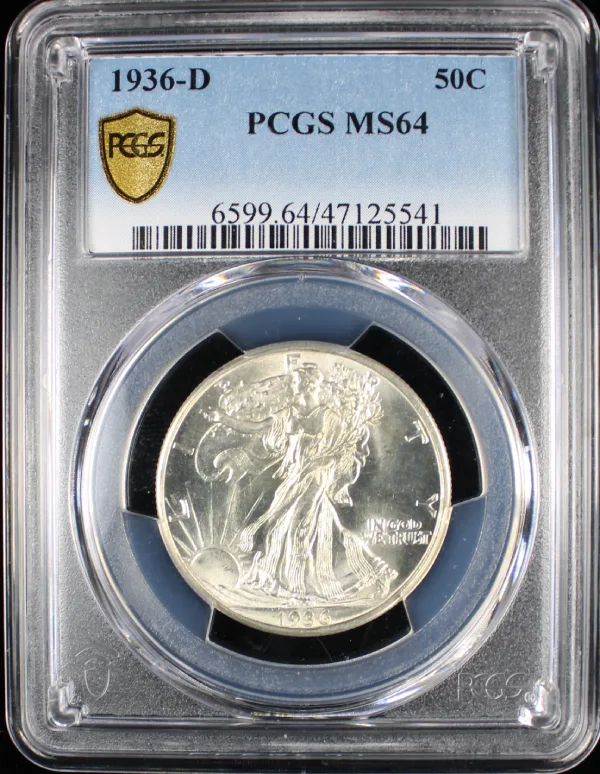
Get a Free Coin Appraisal With Coinfully
Coinfully offers detailed, no-cost coin appraisals that help you understand the true value of your silver half dollars with clarity and confidence.
You can begin with a free online coin appraisal by submitting clear photos or a simple inventory of your coins. Our numismatic experts will evaluate your items, consider rarity and condition, and provide an informed value estimate without charging you or pressuring you to sell.
For large or historically significant collections, Coinfully also provides a complimentary at-home appraisal service.
A trained specialist will travel to your home, review your coins in person, explain their findings, and offer a market-leading purchase price if you choose to sell. This service is free, transparent, and conducted with respect and professionalism.
Eager to discover the true value your coins hold? Contact Coinfully today to speak with one of our experts. We’ll be happy to answer any questions and discuss your collection and next steps.
The post Valuable Silver Half Dollars: 10 Rare Half Dollar Coins To Watch For appeared first on Coinfully - the Best Way to Sell Coins | Free Appraisals.
Original post here: Valuable Silver Half Dollars: 10 Rare Half Dollar Coins To Watch For


Comments
Post a Comment