PCGS Coin Appraisal: It’s Not Quite What You Think It Is
If you own valuable coins and want to know exactly what they’re worth, chances are you have come across the name PCGS and are wondering if a PCGS coin appraisal is a good idea.
The Professional Coin Grading Service is the most widely recognized coin grading authority in the United States, and its certified grades carry serious weight among collectors, dealers, and auction houses.
But PCGS does not offer traditional appraisals. What it provides is something different, and in many cases more useful: an independent, standardized grade that directly impacts your coin’s fair market value.
This guide breaks down what PCGS actually does, how the grading process works, what it costs, and when you should (and should not) use it.
In most cases, it’s best to start with a professional coin appraisal. Coinfully offers free online coin appraisals that are designed to be completely stress-free, accurate, and fully transparent.
Whether you’re just interested in knowing the value of your coin collection or are wanting to sell coins online, Coinfully is your best option.
Table of Contents
What Is PCGS?
PCGS, short for Professional Coin Grading Service, was founded in 1986 and is headquartered in Newport Beach, California. It is one of two major third-party coin grading services in the industry, alongside NGC (Numismatic Guaranty Corporation).
PCGS authenticates and grades coins using the Sheldon Scale, a standardized 1-to-70 grading system.
A coin graded Poor (P-1) is nearly completely worn, while a coin graded Perfect Mint State (MS70) shows zero wear and no flaws under magnification. Over 99.9% of all coins land somewhere between these extremes.
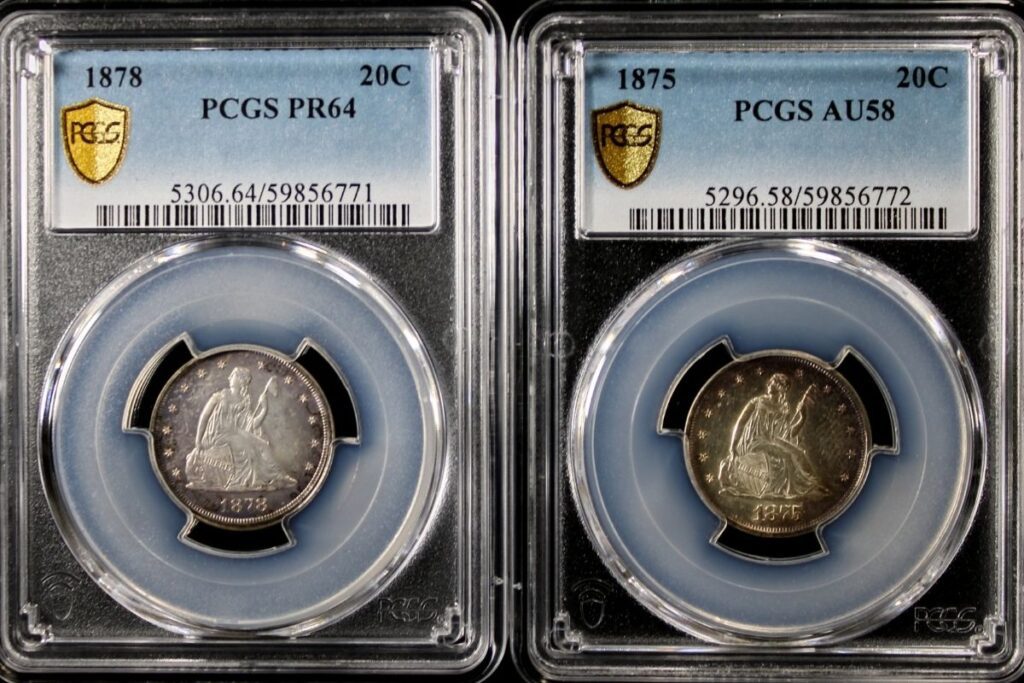
Once graded, your coin is sealed inside a tamper-evident holder, often called a “slab.” The holder displays the coin’s grade, certification number, and other relevant details.
Every PCGS-graded coin is backed by the PCGS Guarantee of Grade and Authenticity, a cash-back policy that ensures the accuracy of the assigned grade as long as the coin stays in its original holder.
What Is a PCGS Coin Appraisal?
PCGS does not perform traditional coin appraisals or assign official dollar values to coins. Instead, it specializes in professional coin authentication and grading, providing an independent condition assessment using the Sheldon Scale.
While a certified PCGS grade can strongly influence market value, determining a coin’s actual value still requires a separate professional appraisal based on current market demand and recent sales data.
How PCGS Coin Grading Works
The PCGS grading process follows a structured evaluation that goes well beyond a quick visual check.
- Step 1: Authentication. Trained experts first verify that your coin is genuine. With counterfeits circulating through the market at increasing rates, PCGS coin authentication protects your investment and gives future buyers confidence.
- Step 2: Grading. Professional graders evaluate the coin’s condition based on surface quality, luster, strike sharpness, eye appeal, and overall preservation. Each factor contributes to the final numerical grade on the Sheldon Scale. Common grade tiers include About Good, Good, Very Good, Fine, Very Fine, Extremely Fine, About Uncirculated, and Mint State (uncirculated).
- Step 3: Encapsulation. After grading, the coin is placed inside a sealed, tamper-evident PCGS holder. Every holder now includes NFC anti-counterfeiting technology, which adds an extra layer of security.
- Step 4: Certification. Your coin receives a unique PCGS certification number. Anyone can verify the grade, description, and imaging through the PCGS Cert Verification tool online.
Additional features include Gold Shield, which provides digital anti-counterfeiting protection and detailed coin images. TrueView imaging captures high-resolution photos that showcase the coin’s appearance.
TrueView photography is included at no additional cost on all PCGS Gold Shield submissions.
PCGS Service Levels and Fees
PCGS offers multiple service tiers based on your coin’s value and how quickly you need results. A Collectors Club membership is required for all submissions, starting at $69 per year for Silver-level membership.
Here is a breakdown of the main service levels as of 2025:
- Economy (coins valued up to $300): $23 per coin. Available for non-gold, non-hammered coins. This is the most affordable option for lower-value pieces, but turnaround takes the longest.
- Modern (1965 to present, up to $2,500): $30 per coin. Designed for newer coins, with a Modern Value option at $17 for coins under $300.
- Regular (up to $2,500): $40 per coin. Includes Gold Shield and TrueView at no additional charge.
- Express (up to $10,000): $70 per coin. Faster turnaround for higher-value coins.
- Walkthrough (up to $100,000): $150 per coin. Prioritized processing for significant coins.
- Rarities (no value cap): $300+ a 1% Guarantee Premium based on the PCGS Price Guide value or your declared value.
Optional add-ons include Variety Attribution ($20 above the grading fee), First Strike Designation ($18), and standalone TrueView imaging ($5). Every submission also carries a $10 handling fee.
How To Get Coins Graded by PCGS
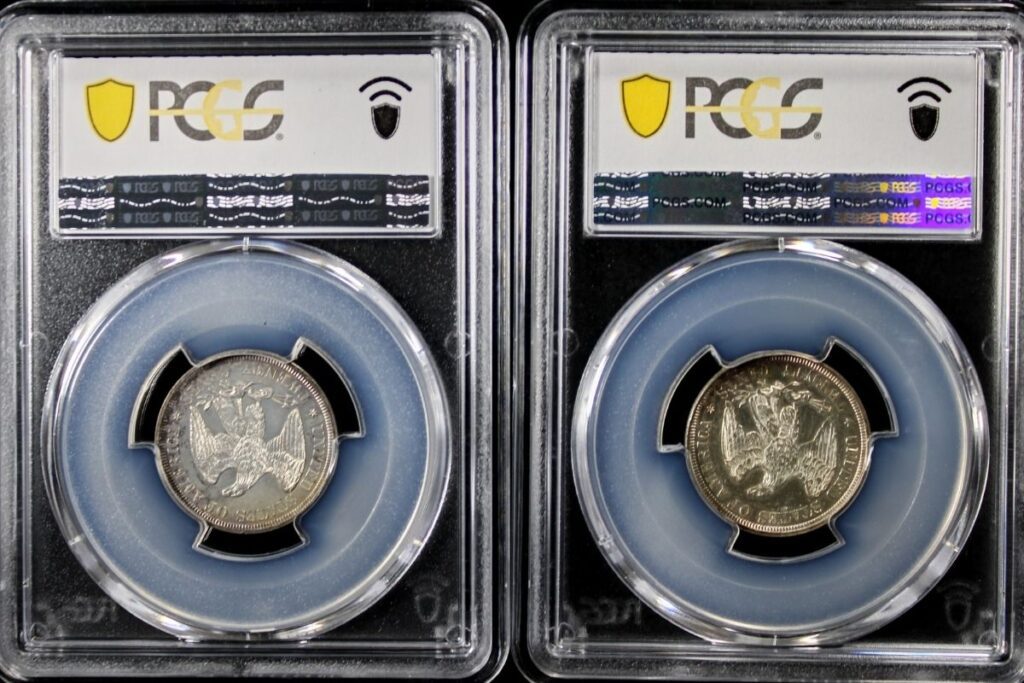
To get coins graded by PCGS, you start by creating an account and purchasing a Collectors Club membership. From there, you fill out a submission form online, pack your coins securely, and ship them to the PCGS submission center.
You can also submit coins in person at major coin shows where PCGS offers on-site grading services with faster turnaround.
If the process feels too intimidating, authorized PCGS dealers can handle submissions on your behalf. Many dealers offer bulk submission rates and handle the paperwork and shipping, which can be especially helpful for larger collections.
PCGS Coin Grading vs. a Coin Appraisal
It is important to understand that PCGS grading and a traditional coin appraisal are not the same thing.
A coin appraisal is a professional evaluation of a coin’s dollar value. An appraiser examines the coin, researches recent auction results and dealer pricing, and provides a written value opinion that can be used for insurance, estate planning, or selling decisions.
PCGS grading assigns a standardized condition score. That grade does not directly tell you what your coin is worth in dollars. However, because the market prices coins heavily based on certified grades, a PCGS grade is one of the most influential factors in determining value.
The PCGS Price Guide and PCGS Population Report provide pricing data and rarity context tied to specific grades.
To put it simply, an appraisal tells you the value, and a PCGS grade tells you the condition. You often need both for a complete picture, but they serve different purposes.
Real High-Value Coins We’ve Appraised at Coinfully
Grading is important for high-value coins, but getting a professional coin appraisal is invaluable if you want to know what your coins are actually worth in today’s market. Here’s a look at a few recent appraisals conducted by Coinfully.
1878 Twenty-Cent Piece (Proof)
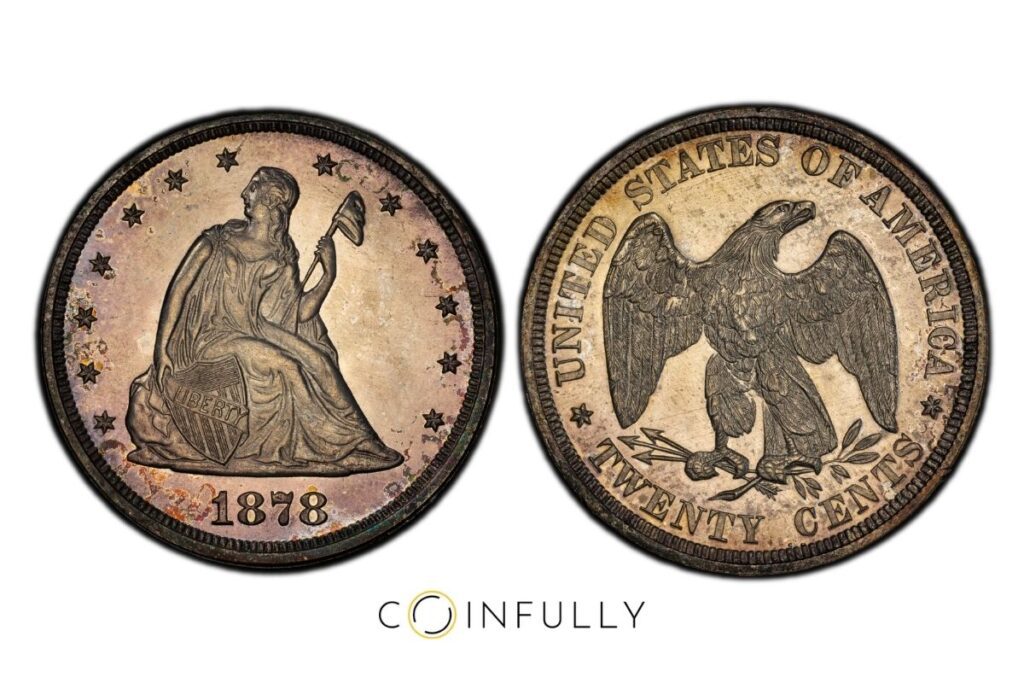
- Certification #: 59856771
- Coin Grade: PR64
- Appraised Value: $4,000
1852 California Gold $10 Assay Office Slug
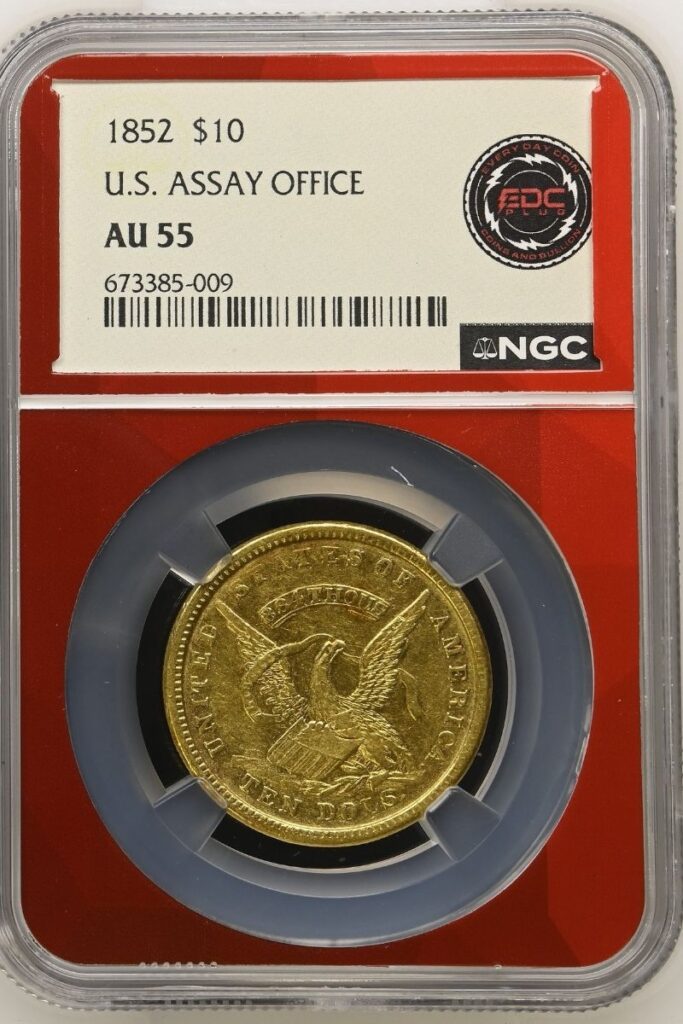
- Certification #: 673885-009
- Coin Grade: AU55
- Appraised Value: $13,800
1885 Liberty Head Nickel (V-Nickel)
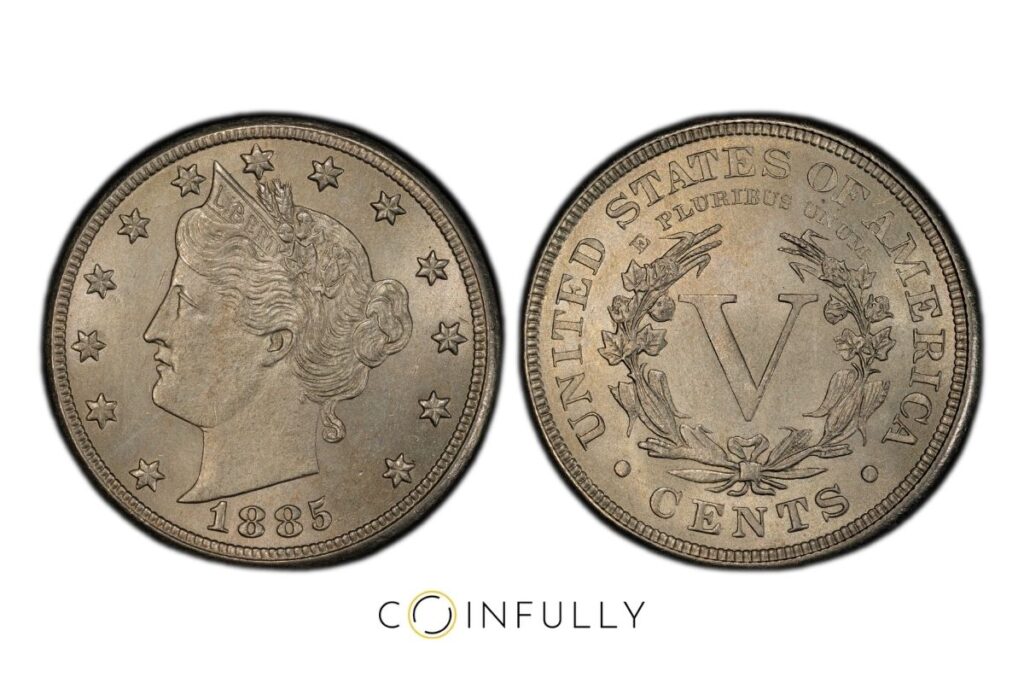
- Certification #: 59851418
- Coin Grade: MS63
- Appraised Value: $3,300
PCGS vs. NGC: How Do These Coin Grading Services Compare?
NGC and PCGS are the two dominant coin grading services, and both are widely trusted. A few differences stand out:
- Membership costs differ. NGC offers an Associate membership starting at $39, while PCGS membership starts at $69 for the Silver level.
- Grading fees are comparable. NGC charges $45 for standard grading on coins up to $3,000. PCGS charges $40 for coins up to $2,500 at the Regular level.
- Market perception varies by category. PCGS-graded coins sometimes command slightly higher prices for U.S. coins, while NGC is often preferred for world coins. Both services produce reliable, consistent results.
When To Get Coins Graded by PCGS
Professional coin grading makes the most sense when your coin has meaningful value.
As a general rule, if a coin is worth several hundred dollars or more in raw form, grading can significantly increase its market appeal and sale price. Rare dates, key varieties, and high-grade pieces benefit the most.
Grading is less practical for common, low-value coins where the coin grading cost could exceed the coin’s worth. A quick appraisal can help you decide whether the investment in grading makes financial sense before you commit.
How Coinfully Can Help
If you have coins you’re thinking about selling, getting an accurate value assessment is the first step. Coinfully offers free online coin appraisals and an at-home coin appraisal service (for qualifying collections) completed by numismatic experts.
Our appraisals cover authentication, condition assessment, and current market valuation, giving you the information you need to make smart decisions about grading, selling, or holding.
Whether your coins are already PCGS-certified or completely raw, Coinfully can evaluate your collection and provide a fair, transparent offer. Contact us today to begin the appraisal process.
If you’d like to discuss your collection or have questions about the process, give us a call at (704) 621-4893 to speak with one of our numismatic experts.
The post PCGS Coin Appraisal: It’s Not Quite What You Think It Is appeared first on Coinfully - the Best Way to Sell Coins | Free Appraisals.
Original post here: PCGS Coin Appraisal: It’s Not Quite What You Think It Is


Comments
Post a Comment