The Truth About Error Coins: Why Photos Alone Can’t Confirm a Real One
“I have a penny with a missing mintmark and a die clash. Can you tell me what it’s worth?” We get messages like this every day, usually sparked by a video promising that ordinary pocket change is worth a small fortune.
Here’s the honest truth: the overwhelming majority of “error” coins are worth their face value. The rare exceptions that are worth real money can’t be verified from a photo. This guide explains why, without any of the hype.
If you have a coin collection but aren’t sure what it’s actually worth, skip the hype videos and get a free online coin appraisal from Coinfully. Our numismatic experts will carefully evaluate each coin and present a professional appraisal that reflects actual market value.
For qualifying collections that we appraise, we’ll include an offer to buy your coins. Should you decide to sell your coins online to us, your package will be fully protected every step of the way, and we’ll issue payment on the same business day that verification is complete.
Table of Contents
The Wheat Cent That’s “Worth Thousands”: Where the Confusion Starts
Let’s start with the coin we hear about most because it perfectly captures the problem. Here’s the scenario. Someone watches a video and then messages us: “YouTube says a 1982 copper penny with no mintmark is worth thousands. I have one.”
What YouTube Gets Wrong About the 1982 Penny
There isa genuinely rare 1982 penny, but the videos tend to scramble the details. The real prize is the 1982-D Small Date struck on a copper planchet.
To be that coin, it must meet three conditions at the same time: it needs a “D” mintmark from Denver, it must be the Small Date style, and it must weigh about 3.07 grams, since it’s struck on a copper planchet rather than the standard zinc.
Only two examples have ever been confirmed to exist, and they have sold for somewhere between roughly $8,000 and $19,000 at auction.
Notice what’s missing from the customer’s description: the “D.” The video dropped the single most important detail and left people hunting for the wrong coin entirely.
“No Mintmark” Usually Means Normal, Not Rare
Here’s what solves the “no mintmark” mystery. A 1982 penny with no mintmark (like most no-mintmark U.S. coins) was made in Philadelphia, and Philadelphia struck these by the millions.
Philadelphia was the first mint, established in 1792, so the practice of marking coins with a mintmark only began once other mints started producing coinage.
A no-mintmark copper 1982 cent is a common coin worth face value unless it happens to be a flawless, high-grade uncirculated example. If there’s no “D,” there’s essentially no chance it’s the famous rarity.
This is the heart of the misinformation problem. A missing mintmark is very rarely an error. On countless coins throughout history, no mintmark simply means the coin came from Philadelphia, exactly as intended.
What a video frames as a thrilling “error” is usually just a normal coin produced in the normal way.
If you’re curious about genuinely rare one-cent coins, see our guide to pennies worth money that covers the top 14 most valuable cents.
Why Most “Error Coins” Aren’t Errors at All
Once you understand the 1982 penny, you can see the pattern behind almost every “is this rare?” question. Most suspected errors fall into a few predictable categories, and very few of them involve a valuable mint error.
Post-Mint Damage vs. a True Mint Error
The single biggest source of false alarms is post-mint damage, or PMD.
- A true mint error happens at the moment of striking, inside the mint.
- Post-mint damage happens afterward, out in the world when coins get scratched, dinged, squeezed in machinery, corroded, or altered by heat and chemicals.
To an excited new collector, a dramatic mark can look like proof of a rare error. To a trained numismatist, that same mark often clearly happened long after the coin left the mint. A genuine error and a damaged coin can look similar at a glance, but they’re worlds apart in value.
Machine Doubling, Die Clashes, and Other Common Look-Alikes
Two of the most common “discoveries” illustrate this perfectly.
Machine doubling, where the design looks slightly shifted or shelf-like, is extremely common and adds essentially no value, yet it’s constantly mistaken for a valuable doubled die. A true doubled die Lincoln cent is a different thing entirely and requires an expert to confirm.
Die clashes, like the one in our customer’s question, are real events that happen when dies strike each other without a coin between them.
However, most die clashes are minor, common, add little to no value, and must be carefully separated from ordinary damage. What it all comes down to is this: the existence of a feature is not the same as the value of a feature.
Altered and Counterfeit “Errors”
There’s also a more deliberate version of this problem: counterfeiting. Because certain rarities are worth real money, some people deliberately fake them. Mintmarks get removed or added, dates get altered, and coins get tooled to mimic a famous error, sometimes convincingly enough to fool a casual buyer.
That’s why the burden of proof is so high and casual identification so risky. Learn more in our guide to the 6 most commonly counterfeited coins.
Why a Photo Can’t Authenticate an Error Coin
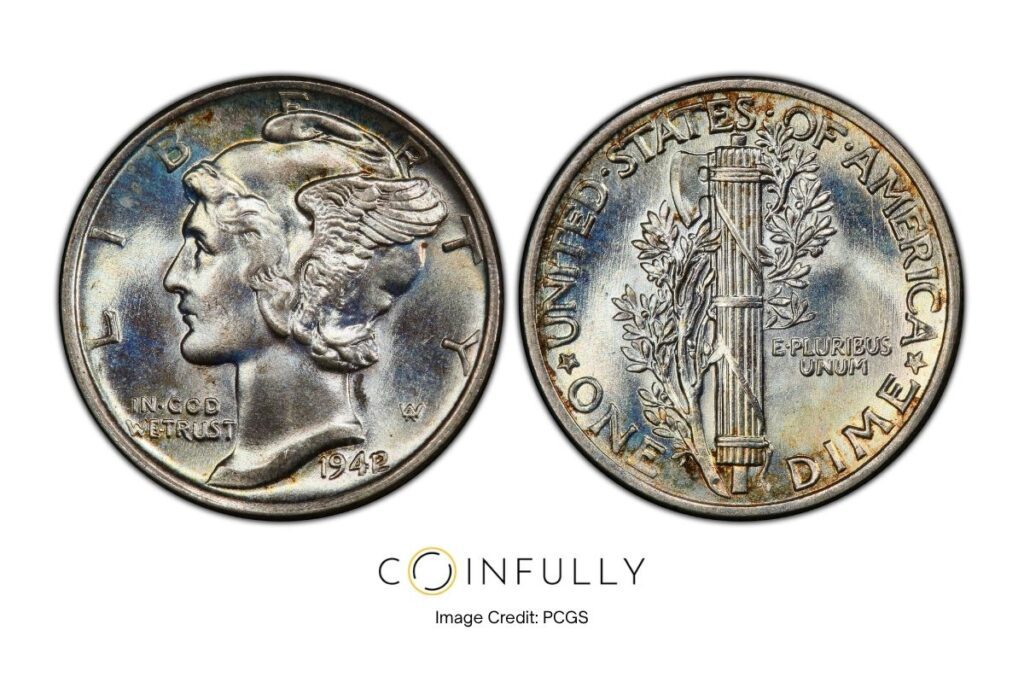
This brings us to the most important point in the entire article and the reason Coinfully isn’t able to appraise error coins.
Genuine error coins simply cannot be authenticated through images alone. It’s not a matter of better lighting or a sharper camera. The information required to verify an error simply can’t be captured fully in a photo.
The Details That Only Exist in Hand
Think back to the 1982 penny. The one factor that separates a common coin from a five-figure rare penny is weight: about 3.07 grams of copper versus 2.5 grams of zinc.
No photograph on earth can show you a coin’s weight. You have to place it on a precise scale. Unfortunately, a picture of the coin on the scale can’t tell the whole story either.
The same is true of the qualities that define most errors. Luster, for instance, has to be rotated under light to be read properly.
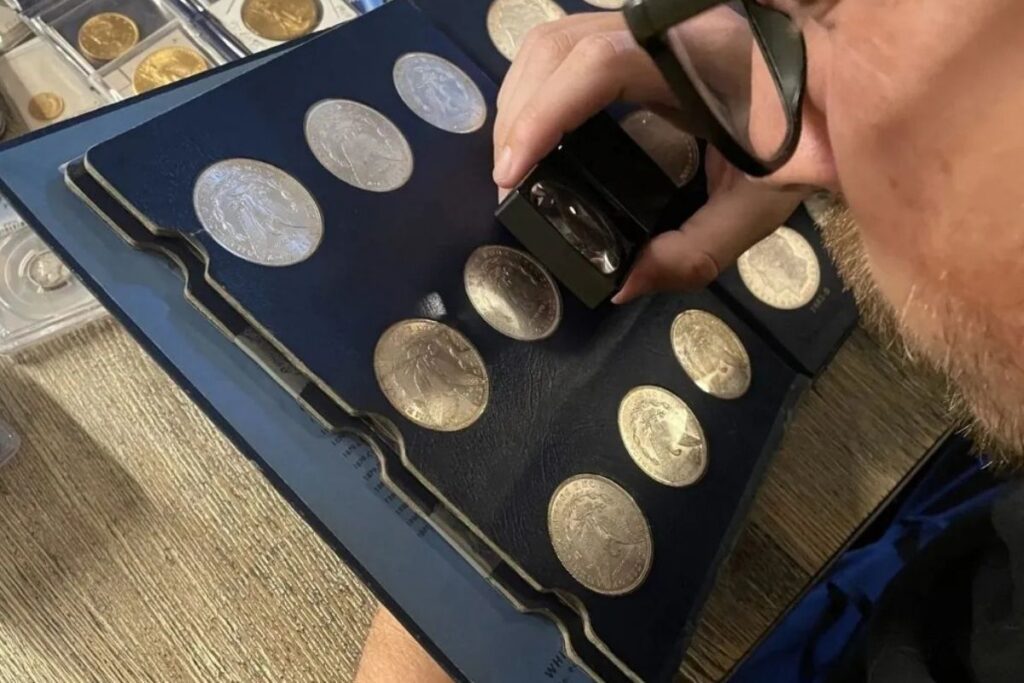
The relief, the edge, and the subtle signs of tooling or alteration reveal themselves only when the coin is examined in hand, under magnification, by someone who knows what to look for. A flat image can’t carry that information.
Real Authentication of Error Coins
For these reasons, real error authentication is done with the coin present. Reputable grading services such as PCGS and NGC, along with recognized error-coin specialists, weigh, measure, and inspect the coin under magnification in proper lighting.
That hands-on process in a controlled environment is the only trustworthy way to separate a genuine rarity from a common coin, a damaged one, or a counterfeit.
What To Do if You Think You Have an Error Coin
Searching out rare coins is a wonderful hobby, and real treasures do occasionally turn up. It just means approaching your find with the right next steps.
Weigh It; Don’t Wish on It
Start with facts you can actually measure. For something like a 1982 cent, an inexpensive digital scale that reads to a hundredth of a gram will instantly tell you whether you have copper or zinc.
That single measurement resolves a huge share of “rare penny” questions in seconds, long before anyone needs to see it. Let the evidence lead, rather than the excitement.
Get It Authenticated by the Right Experts
If your coin genuinely passes those first checks and still looks promising, take it to the people equipped to authenticate it hands-on: an established grading service or a reputable local dealer. You may even inquire at your local shop if they have an error-coin specialist on staff.
They handle the actual verification that a photo can’t. This is the proper path for any coin you truly believe might be a significant error.
Manage Expectations Before You Spend a Dime
Grading costs money and authentication takes time. It’s always your decision, and it’s worth making the right one. If your coin has passed all of the tests, feel confident in getting it checked by an expert.
If your findings suggest the coin is most likely a common variety, the fees and time involved in authentication may exceed the coin’s value.
Knowing this ahead of time saves you from spending real money chasing a coin that’s likely worth exactly its face value.
How Coinfully Can Help and Give Guidance
Coinfully specializes in appraising and buying large and historically important coin collections, key-date coins, vintage coinage, and precious metals through our simple online model, and we pride ourselves on honesty and transparency.
Because genuine error coins require hands-on authentication, we don’t appraise them, and we’ll always tell you so directly rather than guess at a value we cannot verify.
If we can’t verify a coin, we can’t appraise it accurately, and accuracy in numismatics is essential to us. Coinfully is an accredited member of the American Numismatic Association, an authorized, registered dealer with both PCGS and NGC, and holds an A+ BBB rating.
Every mail-in package we receive is fully insured and opened under 4K security cameras. Once collections are verified, payment is issued the same business day.
For those with an extensive, particularly valuable collection, we offer an at-home coin appraisal service where we’ll travel to your location to appraise your coins and make an offer on the spot.
The Real Value Is in Knowing the Truth About Your Coins
Error coins continue to fascinate young and old collectors alike. That’s why it’s so important to know how to identify them, how to handle them, and whether or not to pursue authentication.
You’re now armed with the facts and can make more informed decisions when seeing information online. You’ll know that most “errors” are normal coins, common look-alikes, or ordinary damage and that the genuine rarities can’t be confirmed by a photo no matter how good the picture is.
Real value comes from real authentication, done by qualified experts with the coin in hand.
If you have a collection you would like us to take a look at, start with a free, no-pressure online coin appraisal from Coinfully, or call our team at (704) 621-4893 and we’ll be happy to point you in the right direction.
Frequently Asked Questions About Error Coins
Is my 1982 penny with no mintmark worth thousands of dollars?
Almost certainly not. The rare one is the 1982-D Small Date in copper, which needs a Denver “D” mintmark, the Small Date style, and a copper weight near 3.07 grams all at once, and only two are confirmed to exist. A no-mintmark 1982 cent came from Philadelphia along with millions of others and is worth face value unless it’s top-grade uncirculated.
Why doesn’t Coinfully appraise error coins?
Genuine error coins can’t be authenticated from images, and Coinfully’s online appraisal process depends on photo verification. Key factors such as weight, luster, relief, and signs of alteration only reveal themselves when the coin is examined in hand, under magnification, on a scale. Rather than guess at a value we can’t verify, we’ll point you toward proper hands-on authentication.
How can I tell a real mint error from post-mint damage?
It usually takes an expert to identify a true mint error. A true error happens during striking at the mint, while post-mint damage happens afterward from wear, machinery, corrosion, or tampering. The two can look similar to an untrained eye but differ enormously in value. Common features such as machine doubling and minor die clashes are frequently mistaken for valuable errors even though they add little or no value.
Should I pay to have my coin professionally graded?
Only pay for grading if there’s good reason to believe the coin is genuinely valuable. Grading and authentication fees often exceed the value of a common coin, so certifying an ordinary cent usually costs more than the coin is worth. Weigh and check the coin first, and seek authentication only if it truly passes those initial tests.
Where should I take a coin I believe is a real error?
Take a suspected error coin to an established third-party grading service such as PCGS or NGC or to a reputable local coin shop. You can find recommended dealers on the ANA’s dealer directory at money.org. These are the professionals equipped to weigh, measure, and inspect the actual coin and give you a trustworthy answer.
The post The Truth About Error Coins: Why Photos Alone Can’t Confirm a Real One appeared first on Coinfully - the Best Way to Sell Coins | Free Appraisals.
Original post here: The Truth About Error Coins: Why Photos Alone Can’t Confirm a Real One


Comments
Post a Comment