Why Your Coin’s “Internet Value” Doesn’t Match Live Market Offers
A price guide, Red Book, or a YouTube video gave you a number. A numismatist gave you a lower one. Why the difference?
Information online is almost always the highest possible estimate based on condition, rarity, and outstanding unique aspects of a coin. Those prices may reflect an authenticated error coin, highest asking prices for graded coins, or an extremely rare key date for that coin type.
Why does a coin dealer’s appraisal differ from the coin’s internet value?
Most viewers of YouTube content or online price guides are holding a raw, ungraded coin, and comparing it to that portrayed “dream” scenario is what creates the discrepancy.
This guide explains the mismatch and how to find out what your coins are truly worth.
If you’re eager to learn what your coin or coin collection is worth in today’s market, try a free online coin appraisal from Coinfully. Our numismatic experts will provide you with a detailed valuation that transparently reflects true market value.
After that, you can decide whether to keep your collection or sell your coins online through our streamlined, stress-free process.
Table of Contents
Why the Offer Feels “Too Low”
We hear this question often:
“My Red Book and YouTube say my 1986 Silver Eagle is worth $120. Why is the offer different?”
It’s actually a great question. Here’s the honest answer: the figures in Red Book and online are measuring different things.
In almost every case, that online price describes a coin in a sealed grading holder, certified in near-perfect condition, and listed at the highest price a seller could hope to get.
Most coins are raw, or in an album, and that’s a different product in the eyes of the market, even if it looks identical to the naked eye.
There are four forces at work here: retail versus wholesale, raw versus graded, the cost of grading, and the low collector premium on modern bullion. Once you see all four, the offer starts making a lot more sense.
Retail Asking Prices Are Not Real Market Offers
The single biggest source of confusion is the difference between an asking price and a buy price.
Price guides such as Red Book (officially, A Guide Book of United States Coins) and the PCGS Price Guide are wonderful educational tools, but they’re built to show retail values, which reflect the price you might pay to buy a coin from a dealer, not the price a dealer will pay you for it.
Every business that resells anything, from cars to coins, has to buy below retail to cover overhead, risk, and the cost of eventually finding a buyer.
YouTube prices are even trickier. Many “your coin is worth $$$” videos are chasing views, and they quote the rarest, highest-graded, best-case example that has ever been sold. A single record-breaking auction result is not the market. It’s the absolute top.
Also, we have to ask ourselves, “what’s the motive?” when it comes to consuming content online. If there are big flashing thumbnails on videos to catch your eye and draw your attention, it’s good to take information from that source with a grain of salt.
Then there are online marketplace listings. Anyone can list a coin for any “Buy It Now” price they want. What a coin is listed for and what it actually sold for are two very different data points, and only the second one reflects real market value.
For example, you can see what a coin actually sold for by filtering to “sold” and “completed” items on eBay. To estimate what a seller earned for that particular item, factor in eBay’s seller fee and shipping.
So when you see “$120,” or another impressive figure, always ask three questions:
- Is this a retail price or a buy price?
- Is it for a graded coin or a raw one?
- Is this a real completed sale or just what someone is hoping to get?
Raw vs. Graded Coins: The Price Spread That Explains Everything
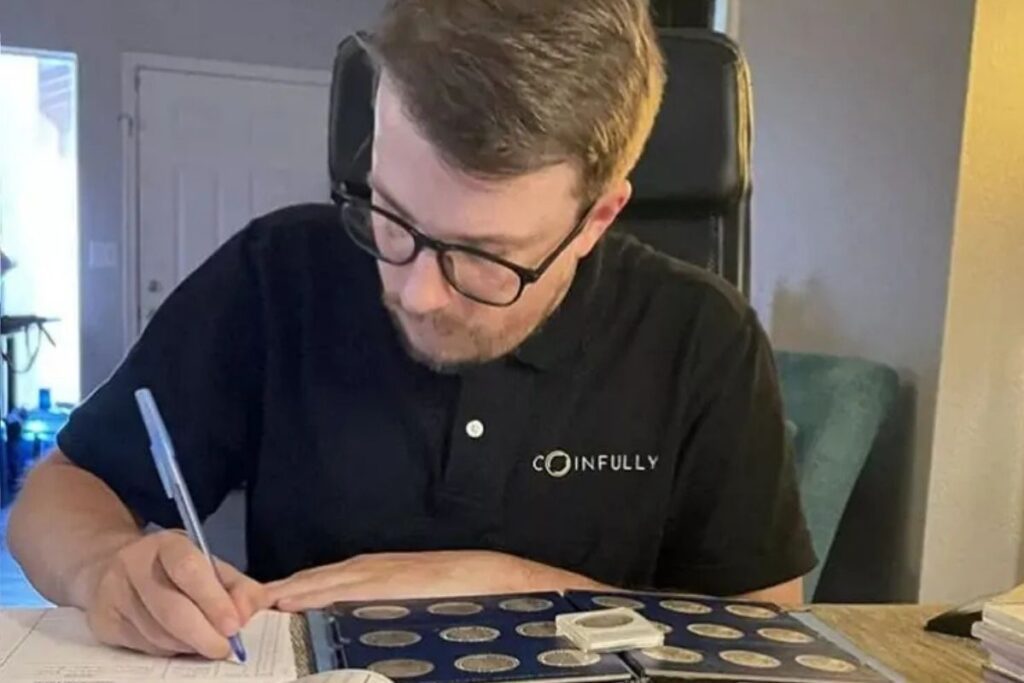
A raw coin is ungraded and uncertified. It’s exactly as it came out of the mint, an album, or an inherited collection.
Actually, it’s probably not the exact state as when it came out of the mint. It’s most likely seen wear and circulation. Some coins may be kept in safes or tucked away to maintain an uncirculated designation while still raw, but that’s rare.
A graded coin has been sent to a third-party service such as PCGS or NGC, authenticated, assigned a grade on the 1-to-70 Sheldon Scale, and sealed in a tamper-evident holder collectors call a “slab.”
That slab changes everything about how the coin is priced. For modern coins such as Silver Eagles, the entire premium lives at the very top of the grading scale.
A coin certified MS70 can sometimes command a higher premium than the exact same coin certified MS69 because a guaranteed-perfect example is genuinely scarce and collectors will pay for that certainty.
Eye-catching prices you found online are almost always for MS70 (or high-MS69) graded coins. At the same time, premiums on signature label, first-day-of-issue, MS70 Silver Eagles may diminish or fail to hold because so many of these coins have been graded.
We hear very often that collectors are surprised that MS70 Silver Eagles might be trading for less than silver spot. Oftentimes, MS70 Silver Eagle first-day-of-issue signature labels are sold at a premium, but that premium doesn’t always hold when it comes time to resell the coin.
A raw coin has even less certainty when it comes to resale. A professional buyer cannot assume a number grade and takes a gamble on every raw coin bought based on condition if the coin isn’t in a certified holder.
In fact, dealers have to assume and appraise to a modest grade because the overwhelming majority of raw coins grade lower once they’re examined under proper lighting and magnification.
Tiny contact marks, faint hairlines, and weak strikes that are invisible to the naked eye are exactly what a grader is trained to catch in a professional appraisal setting.
So, a raw Silver Eagle is valued conservatively as a recognizable, tradable bullion coin. The MS70 versions of the coin may carry a small premium depending on market volatility, but sometimes that premium may be less than the collector expects.
The most significant jumps from raw to graded coins are with conditional rarities and key-date coins. When a coin hits an MS65 (Mint State) or higher, a single-point grade bump from MS65 to MS66 can increase its value by thousands.
This is where Red Book can genuinely come in handy. Look for those price jumps, and that’s when a truly unique coin can be worth sending off for grading. Pre-1933 gold coins are another example where reaching a grade like MS67 can push certain dates’ values significantly higher.
Key-date and low-mintage coins work the same way. For example, early 20th-century coins such as the 1909-S VDB or 1914-D Lincoln Cent are well-known examples, where grading authenticates both the coin and the rarity, securing a real premium.
The Grading Gamble: To Slab or Not To Slab a Coin
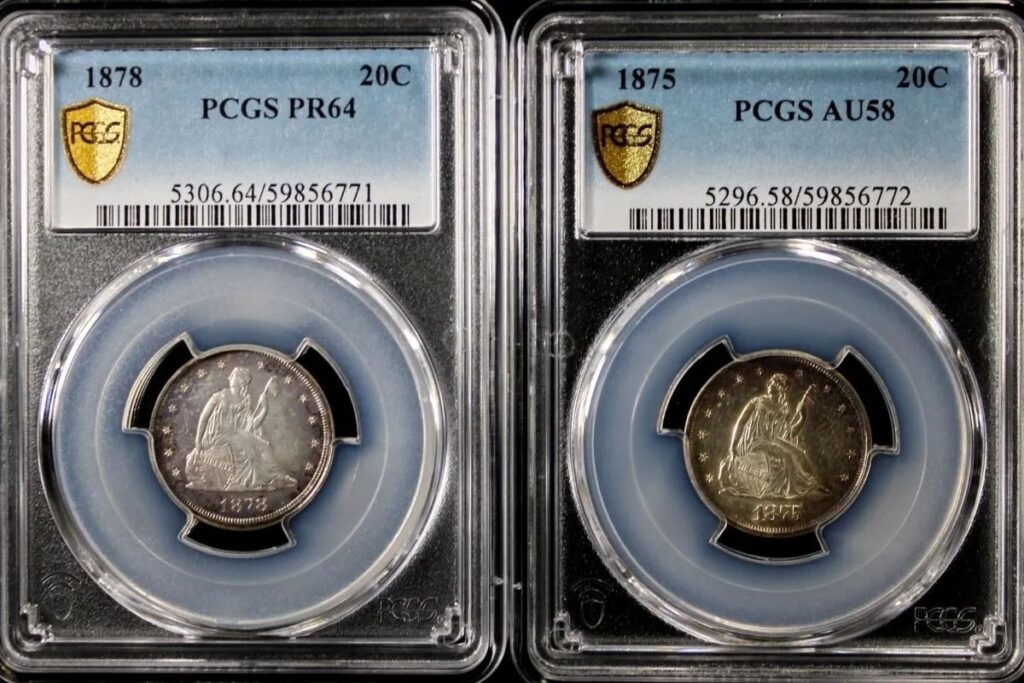
For the right coin, it can be a smart move. For a common or modern coin, it’s usually a losing bet. Why? Because grading is not free.
To submit a coin for grading, you generally need a paid membership, plus a per-coin grading fee, plus a handling fee, plus insured shipping to the grading service and back.
Realistically, you’re looking at a significant cost per coin before you ever know the result. You can see a full breakdown in our guide to how much it costs to get a coin graded.
Now here’s the gamble. You’re paying that money before the grade is assigned. If your coin comes back with a high grade, the premium might justify the expense.
However, if it comes back a low grade, which is far more common, then you’ve possibly spent more on grading than the coin’s value.
On a single common-date bullion coin, the odds are rarely in the collector’s favor. This is why experienced dealers do not grade everything. They grade coins where the potential upside clearly beats the guaranteed cost and risk.
A raw, common coin almost never clears that bar. Paying to slab it is like paying for a lottery ticket that, even when it wins, barely covers its own price. For a deeper look at what the service actually does, see our breakdown of the PCGS coin grading process.
Why Silver Eagles Carry Such a Low Numismatic Premium
There’s one more piece to the puzzle, and it surprises a lot of people, especially right now.
At the time of writing, silver is trading north of $60 an ounce, which are historically high levels. It’s natural to see headlines about soaring silver and assume your Silver Eagles must be soaring right along with them.
In a sense, they are. A Silver Eagle contains 1 troy ounce of .999 fine silver, so its value rises and falls with the metal.
But that’s exactly the point. For most Silver Eagles, the value is the silver. The numismatic premium, i.e., the extra collector value stacked on top of the melt value, is very low for these coins. The reason is simple: they are not rare.
The U.S. Mint has produced American Silver Eagles by the tens of millions nearly every year since 1986. When something is minted in those quantities, ordinary examples cannot command a big collector premium, no matter how beautiful they are. There are simply too many of them.
So a common raw Silver Eagle behaves like bullion. Its price tracks the spot price of silver, plus a small, fairly consistent premium, but not the rarity-driven prices you see for scarce, century-old coins or certified perfect examples.
High silver actually helps your coin’s baseline value, but it doesn’t transform a common bullion coin into a numismatic rarity. Those are two different worlds.
*Note: The 1986 first-year issue does draw slightly more collector interest than later dates, but in raw, uncertified form, even a 1986 still trades much closer to its bullion value than to that $120 headline. The headline number lives in the slab.
Selling Your Coins With Coinfully
Understanding all of this is exactly why sellers come to us. You don’t just want a number; you want the right number, explained honestly, from experts who will pay you a market-leading price. That’s what Coinfully was built to do.
- We run lean, so you benefit. We’re a technology-led operation without the overhead of a retail storefront, and we put that efficiency into a personalized, expedited experience for every collector we work with.
- Our appraisals are done by true numismatists. Coinfully was founded by people who spent careers inside the country’s most respected numismatic institutions. Every collection is authenticated, condition-assessed, and valued against current market demand and real completed sales.
- The whole process happens from the comfort of your home. You start with a simple online coin appraisal, send photos or an inventory, and we walk you through it. For qualifying collections, one of our experts will even travel to you with our at-home appraisal service.
- You are protected at every step. We’re an accredited member of the American Numismatic Association (ANA) and an authorized, registered dealer with both PCGS and NGC. Every mail-in package is fully insured (backed by Lloyd’s of London) and opened under 4K security cameras. Once your collection is received and verified, payment is issued the same business day.
That combination of lower overhead, real expertise, a transparent process, and airtight security is why so many collectors seek out Coinfully for a painless and prompt selling experience.
Real Coins We’ve Appraised at Coinfully
The following examples of high-value coins recently appraised by Coinfully show how valuable a professional appraisal can be. While much of your collection likely doesn’t match the extreme prices you find when looking online, sometimes, it can contain a real treasure.
1878 Twenty-Cent Piece (Proof)
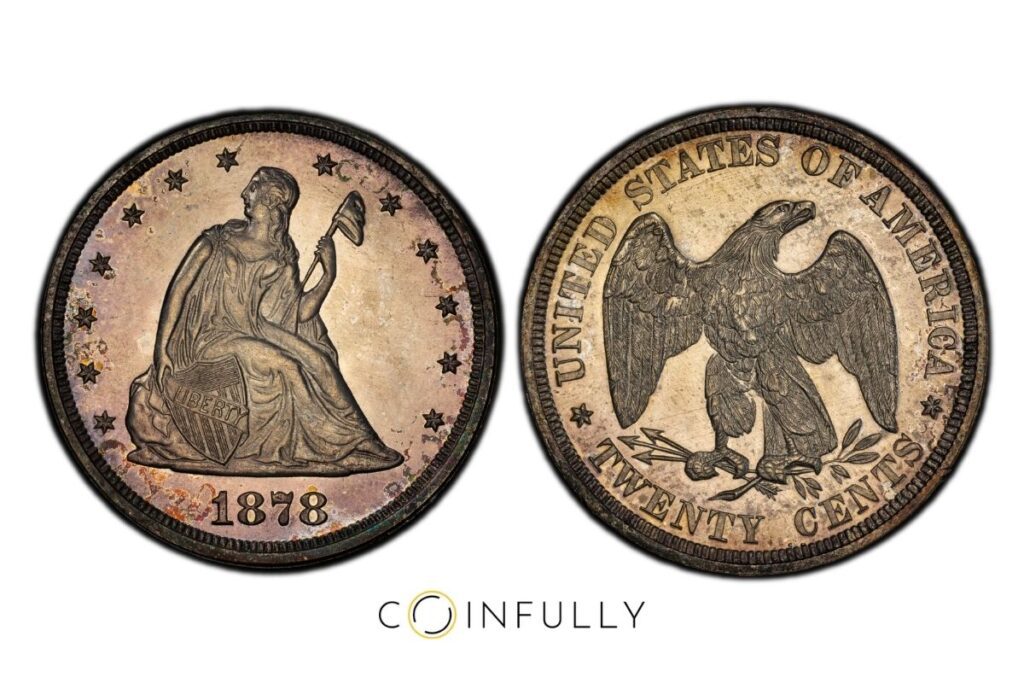
- Coin Grade: PR64
- Approximate Value: $4,000
1795 Half Cent (Lettered Edge, Early American)
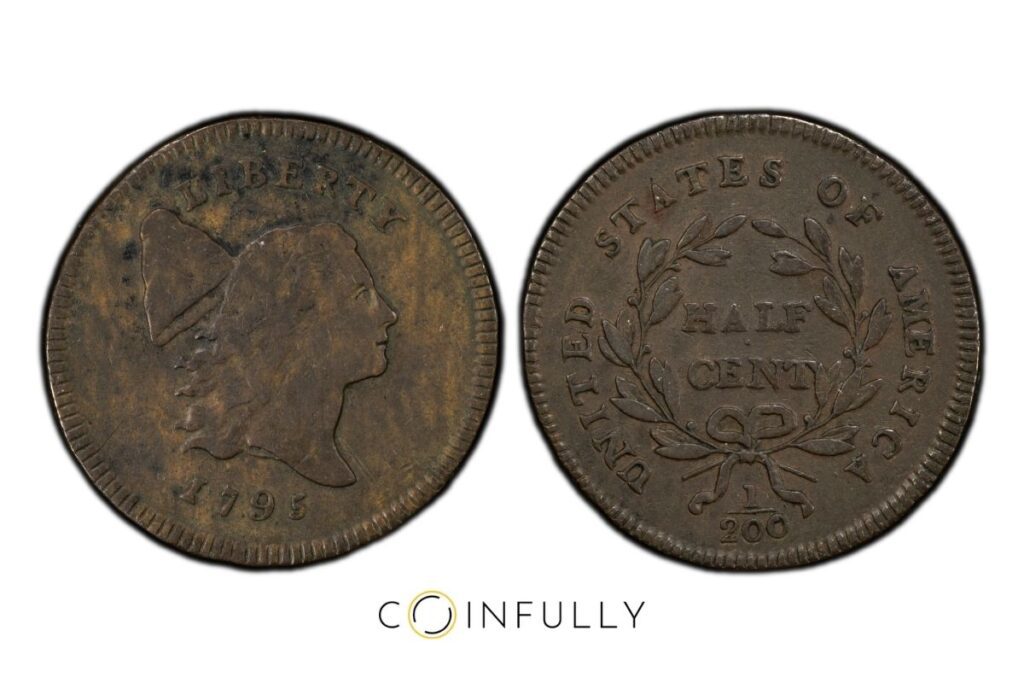
- Coin Grade: VF35
- Approximate Value: $4,800
Know What Your Coins Are Worth Before You Sell
The gap between your coin’s “internet value” and a real market offer comes down to a few consistent differences: retail versus wholesale, a graded slab versus a raw coin, a hopeful listing versus a completed sale, and a rare collectible versus a common bullion coin.
The fastest way to replace guesswork with a real number is to have an expert look at your actual coins.
Get a free, no-pressure online coin appraisal from Coinfully and find out exactly what your collection is worth in today’s market. Send us a few photos to get started, or call our team at (704) 621-4893 to talk it through with a numismatist.
Frequently Asked Questions About Coin Values
Why is a dealer’s offer lower than Red Book or Price Guide?
Price guides show retail asking prices, that is, what you would pay to buy a coin, not the wholesale price a buyer pays you. Almost every dealer has to buy below retail to cover overhead and resale costs. Those guide values are also usually based on certified, high-grade examples, not raw coins, which widens the gap further.
Is my raw 1986 Silver Eagle really worth much less than the $120 I saw online?
Almost certainly, yes. That $120-type figure is typically for a coin graded MS70 (or high MS69) and sealed in a slab. A raw, ungraded Eagle carries no grade guarantee, so it’s valued conservatively as a bullion coin plus a small premium. It’s not worthless; it just isn’t the same product as the certified coin in that listing.
Should I pay to have my Silver Eagle graded?
Usually no, not for a common date. Between membership, per-coin fees, handling, and insured shipping both ways, grading costs add up, and you pay them before you know the result. If the coin grades MS69 instead of MS70, the small premium often won’t cover what you spent. Grading pays off mainly on scarcer or clearly high-grade coins.
If silver prices are so high, why isn’t my Silver Eagle worth more?
It is worth more because its bullion value rises with silver, but most Silver Eagles are minted in the tens of millions, so they carry almost no collector (numismatic) premium above their melt value. High silver lifts the baseline, but it does not turn a common bullion coin into a rare collectible.
How do I find out what my coins are actually worth?
Have them evaluated by a numismatic expert who prices them against current demand and real completed sales, not just a price guide. Coinfully offers a free, transparent online coin appraisal you can complete from home, complete with an authentication, condition assessment, and an accurate market value, so you know exactly where you stand before you decide to sell.
The post Why Your Coin’s “Internet Value” Doesn’t Match Live Market Offers appeared first on Coinfully - the Best Way to Sell Coins | Free Appraisals.
Original post here: Why Your Coin’s “Internet Value” Doesn’t Match Live Market Offers


Comments
Post a Comment