Is Coinfully a Certified Appraiser? Working With Licensed Dealers
“Is Coinfully documentation legally recognized and official for what I need?” This is often one of the first questions estate attorneys, trustees, and nonprofit organizations ask, and rightly so.
When a coin collection factors into a probate case, an estate plan, an equitable distribution, or a charitable donation, the documentation must come from a certified appraiser and meet professional and legal requirements.
This guide explains Coinfully’s credentials, why numismatic appraisal standards differ from other appraisal credentialing, and how our documentation supports the legal and tax requirements that professional and institutional clients rely on every day.
If you’re in need of a professional coin collection evaluation, whether it’s for selling, estate, probate, or donation purposes, a free online coin appraisal from Coinfully can satisfy both your personal and legal needs.
Call (704) 621-4893 to learn more about Coinfully’s appraisal process or with any questions regarding your coins.
*The content contained here should not be considered legal or tax advice. Consult an attorney or tax professional for information regarding your specific situation.
Table of Contents
Questions That Matter
Two questions come up again and again from the professionals with whom we work: “Will you buy the collection as a whole?” and “Does your appraisal work for my legal needs?” Both are the right questions to ask, and the answer to each is yes.
Understanding the reasoning behind that answer is what gives attorneys, fiduciaries, and organizations the confidence to move forward.
Buying an Entire Collection
Coinfully regularly purchases complete collections in a single transaction rather than cherry-picking a handful of standout pieces.
Depending on the collection, it may make more sense to sell it to a local coin shop, and if that’s the case, we’ll tell you that upfront and explain why.
For an executor closing an estate or a trustee winding down a trust, selling as a whole is important. It means one buyer, one valuation, one payment, and one clean record instead of piecing out a collection across multiple sales and reconciling the results later.
Handling the whole collection at once simplifies accounting and shortens the timeline for everyone involved.
Documentation Built for Professional Use
Our documentation is prepared with legal and tax purposes in mind. Estate, probate, equitable distribution, and charitable donations all carry their own unique requirements and often demand higher levels of documentation beyond a standard appraisal.
Coinfully provides documentation suited to meet those standards, so the numismatic appraisal you receive is an official record that supports the filing or proceeding to which it is attached.
How Numismatic Credentialing Works
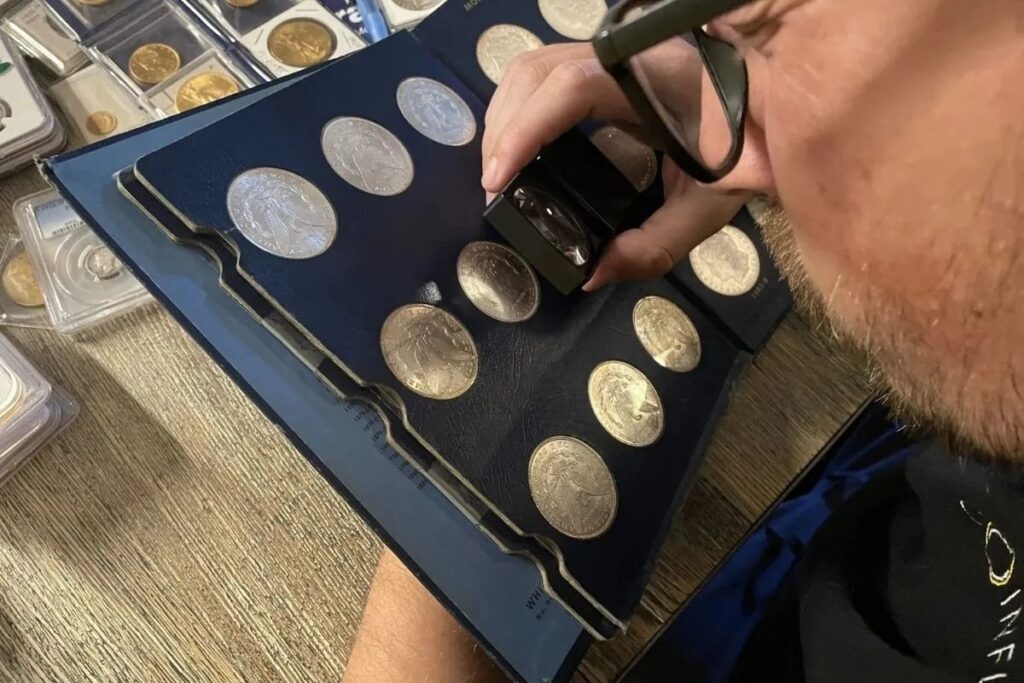
In many appraisal fields, an individual earns a personal designation. In the numismatic field, however, professional credentialing generally works differently.
Why Credentials Are Held at the Firm Level
Credential standing is established at the firm level through recognized dealer accreditation and grading-service registration rather than through a single individual’s certificate.
This is how the coin industry is structured, and it’s why the most important question to ask is whether a firm carries the accreditations and dealer recognitions that the market and the relevant authorities respect.
Coinfully holds all the necessary credentials. Coinfully is an accredited member of the American Numismatic Association and a certified, registered, and recognized dealer with both PCGS and NGC.
What ANA Accreditation Means
The American Numismatic Association is the leading organization in the field. Accredited membership signals that a dealer operates under recognized professional and ethical standards and possesses demonstrable expertise in valuing coins and large and historically important collections.
For a professional client, ANA accreditation is a clear, verifiable marker of legitimacy that stands up to scrutiny.
What PCGS and NGC Dealer Status Adds
PCGS and NGC are recognized as the industry standard grading services in numismatics. Coinfully is a certified and registered dealer with both PCGS and NGC, which means that we work directly within the same valuation framework that sets market prices for coins nationwide.
That connection is significant when a valuation needs to be defensible because it ties our figures to the highest recognized standards used by PCGS and NGC.
Coinfully and IRS Form 8283 Qualified Appraisals
For charitable donations of coin collections, the key document is IRS Form 8283, and Coinfully has substantial hands-on experience in this area.
When a Qualified Appraisal Is Required
Laws governing reporting are subject to change, but as of 2026, a noncash charitable contribution of more than $500 generally requires Form 8283 to be filed with the donor’s return.
When the claimed deduction for an item or group of similar items exceeds $5,000, the IRS requires a written qualified appraisal prepared by a qualified appraiser, reported in Section B of the form.
For very large donations exceeding $500,000, the qualified appraisal itself must be attached to the return. Keep in mind that Form 8283 is an appraisal summary, not the appraisal itself, so the underlying qualified appraisal still has to be done properly.
* Please consult a tax professional for information regarding your specific situation.
How Coinfully Meets the Qualified Appraiser Standard
A qualified appraiser is one who has verifiable education and experience in valuing a specific type of property and who regularly performs appraisals.
Coinfully’s ANA accreditation and PCGS and NGC dealer status establish precisely that kind of verifiable expertise in numismatic property.
The firm-level credentials described above satisfy the professional standing of a qualified appraiser when the property is a coin collection.
Signing the 8283 Declaration
Coinfully has completed and signed Form 8283 documentation for donors many times, including the appraiser declaration that Section B requires.
Because we have been through the process repeatedly, we understand what donee organizations and tax preparers expect, and we prepare documentation that helps finalize the process smoothly.
A Note on Grouping Similar Items
It’s important for donors to understand how the $5,000 threshold is measured. The IRS applies it to groups of similar items, not just single coins, and the values must be aggregated even when a collection is split across more than one charitable organization.
A donor who gives part of a collection to one nonprofit and the remainder to another still combines the values when deciding whether a qualified appraisal is required.
Supporting Estate, Probate, and Distribution Needs
Charitable donations are only one of several situations where our documentation is put to use. Our credentials support a broad range of legal matters.
Estate Planning and Probate
For estate planning and probate, an accurate, credentialed valuation of a coin collection helps establish date-of-death values, supports the inventory an executor must file, and reduces the risk of disputes later.
Attorneys and fiduciaries need figures they can defend, and documentation from an accredited dealer provides that footing.
Equitable Distribution
When a collection must be divided fairly among heirs or parties, a clear and credible valuation is the foundation of an equitable outcome.
Coinfully’s documentation gives everyone involved a common, trustworthy reference point, which makes distribution conversations more efficient.
Charitable Donations and Nonprofits
Nonprofit organizations that receive coin donations often need reliable documentation both to acknowledge the gift and to support the donor’s filing.
Coinfully works with organizations and their donors to make sure the numismatic side of the paperwork is handled correctly so that the donation proceeds smoothly for all parties.
Discretion for Sensitive Matters
Estate and trust matters are often private, and the parties involved value discretion as much as accuracy. Coinfully handles all professional engagements with confidentiality and care, keeping communication clear and limited to the people who need to be involved.
For attorneys and fiduciaries handling family dynamics or sensitive circumstances, working with a dealer who treats the matter seriously is part of what keeps the process smooth from start to finish.
Working With Coinfully on High-Value Collections
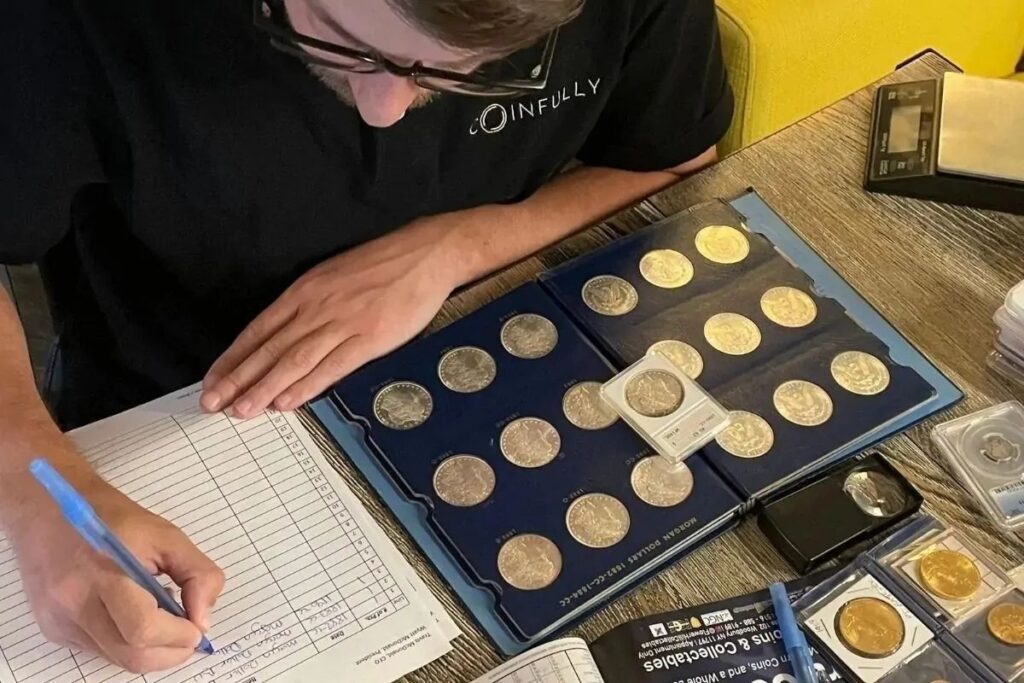
Professional and institutional clients represent some of the highest-value collections we see, and our process is built to protect them.
Coinfully holds an A+ rating with the Better Business Bureau, which is a reflection of consistent, trustworthy dealings.
Every mail-in package is fully insured, and all packages are opened under 4K security cameras, so the chain of custody is documented from the moment a collection is shipped.
Once a collection is received and verified, payment is issued the same business day, which keeps estate and trust timelines moving.
For attorneys, trustees, and organizations managing sensitive matters, that combination of security, documentation, and speed removes much of the uncertainty from handling a valuable coin collection.
We are also glad to coordinate directly with your office on timing, logistics, and any specific documentation your matter requires.
In some cases, the collection may qualify for in-person appraisal. For large or historically significant collections, a team member from Coinfully will travel to your location to conduct the appraisal and prepare all the required documentation.
Documentation You and Your Clients Can Rely On
Coinfully carries ANA accreditation as well as the PCGS and NGC dealer recognitions that support qualified appraisals for IRS Form 8283 and satisfy the specific requirements for charitable donation, estate planning, equitable distribution, and any proceedings regarding appraised coin collections.
We encourage clients to coordinate the final filing with their own tax or legal advisor, but you can trust Coinfully to provide credentialed, defensible documentation that fits the requirement in front of you.
When the paperwork has to stand up to scrutiny, our documentation is prepared with that standard in mind.
If you have questions regarding a coin collection, our coin appraisal process, or the appraisal you received, reach out by calling (704) 621-4893.
Frequently Asked Questions About Coin Appraiser Certification
Is Coinfully a certified appraiser?
In numismatics, professional standing is established at the firm level rather than through an individual’s personal designation. Coinfully is an accredited member of the American Numismatic Association and a certified, registered, and recognized dealer with both PCGS and NGC. Those firm-level credentials provide the verifiable expertise that qualified appraisal requirements call for when the property is a coin collection.
Does Coinfully’s appraisal satisfy IRS Form 8283 for charitable donations?
Yes. For donations where the claimed deduction exceeds $5,000, the IRS requires a written qualified appraisal by a qualified appraiser in Section B of Form 8283. Coinfully’s accreditation and dealer status meet that standard for numismatic property, and we have completed and signed 8283 documentation, including the appraiser declaration, many times.
Will Coinfully buy an entire estate collection at once?
Yes. Coinfully regularly purchases complete collections in a single transaction, which gives executors and trustees one valuation, one payment, and one clean record. This is often far simpler for estate and trust administration than selling a collection piece by piece across multiple buyers.
Can Coinfully provide documentation for probate or equitable distribution?
Yes. The same accredited credentials that support charitable donation appraisals also support estate and probate valuations and equitable distribution among heirs. Coinfully provides clear, credible documentation that attorneys and fiduciaries can rely on as a common reference point.
Do I need a qualified appraisal for a donation under $5,000?
Noncash donations over $500 require Form 8283, but a written qualified appraisal is typically required only once the claimed deduction for an item or group of similar items exceeds $5,000. Your tax advisor can confirm the exact requirement for your specific situation, and Coinfully can provide appropriate documentation either way.
The post Is Coinfully a Certified Appraiser? Working With Licensed Dealers appeared first on Coinfully - the Best Way to Sell Coins | Free Appraisals.
Original post here: Is Coinfully a Certified Appraiser? Working With Licensed Dealers


Comments
Post a Comment